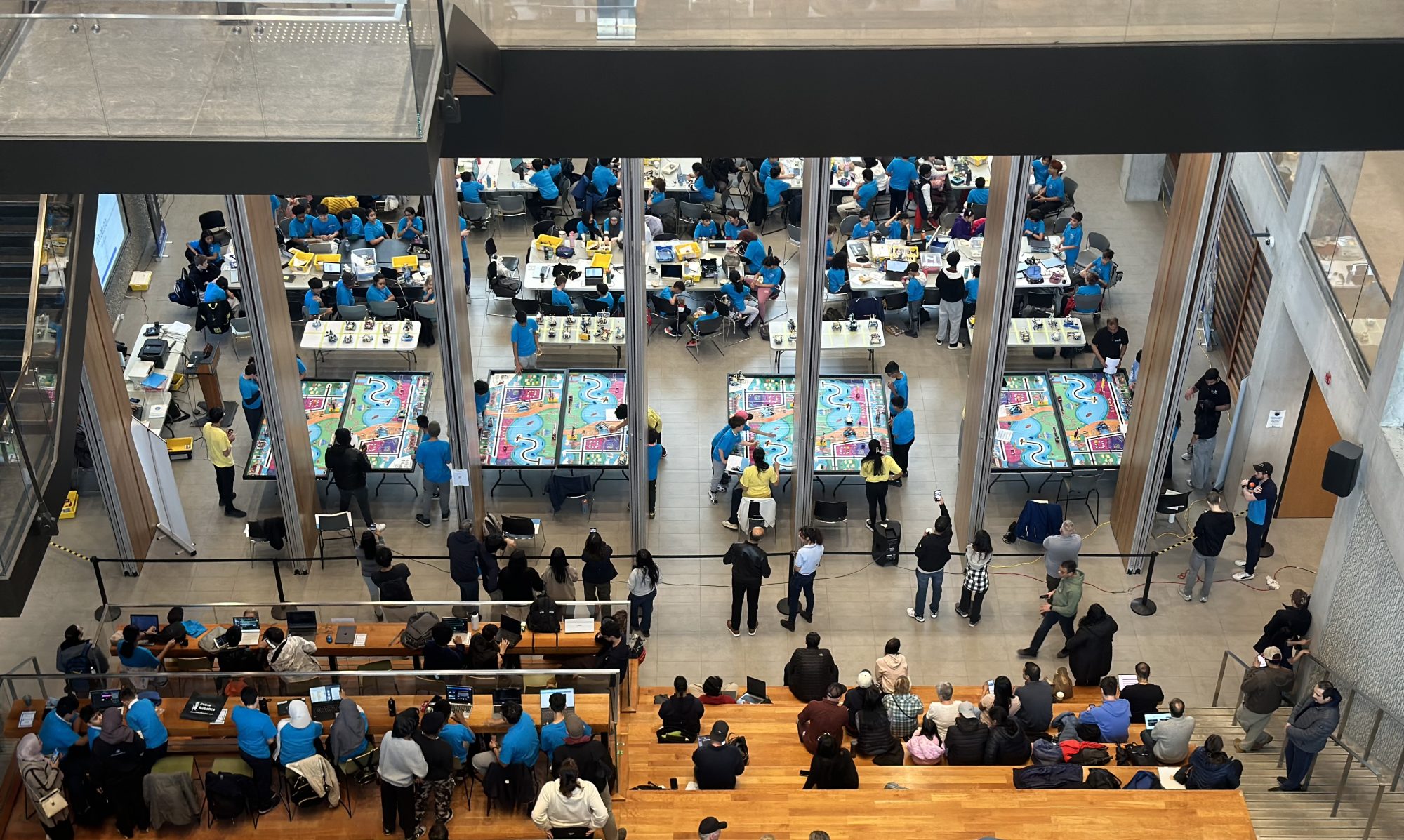
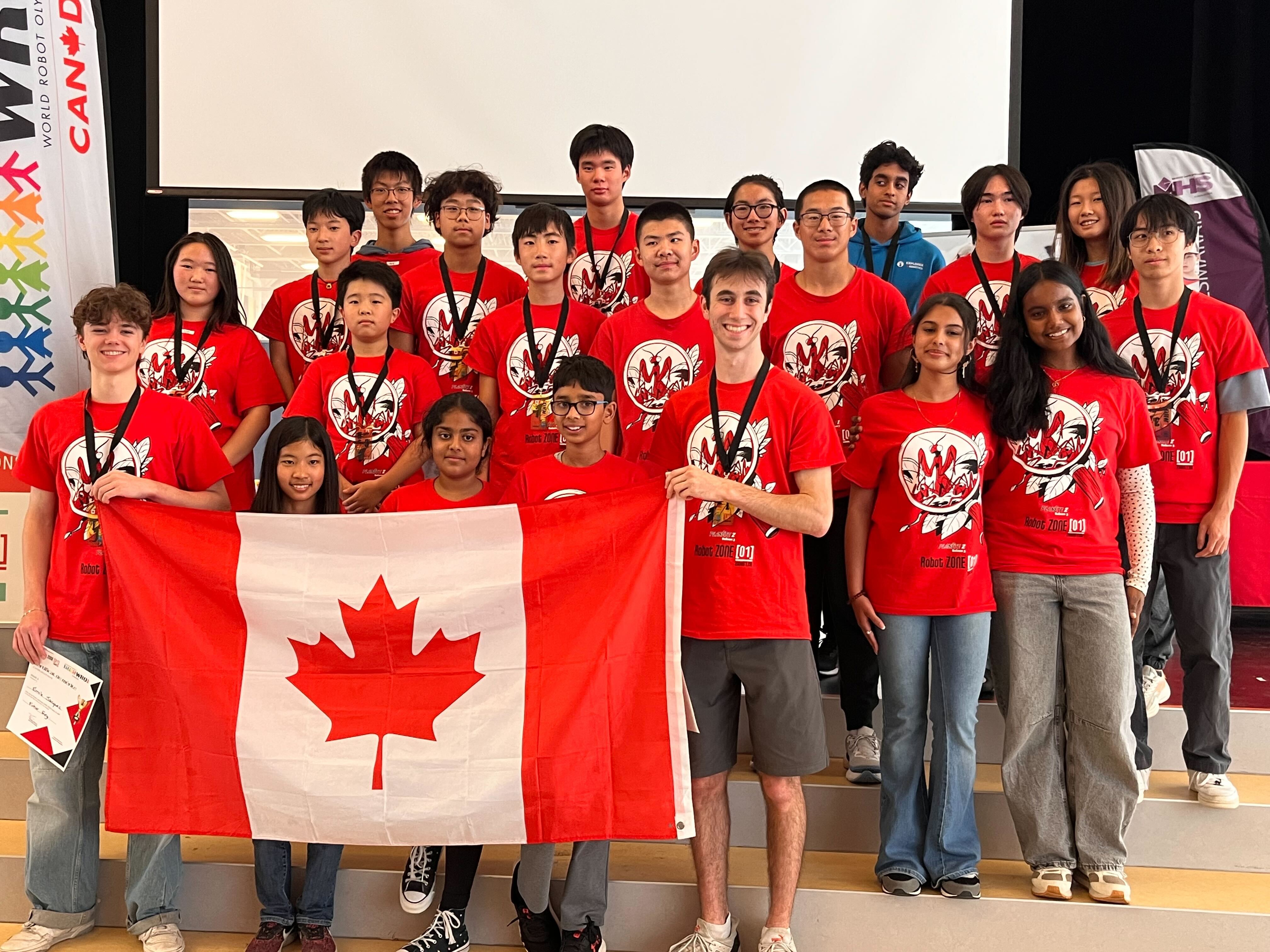
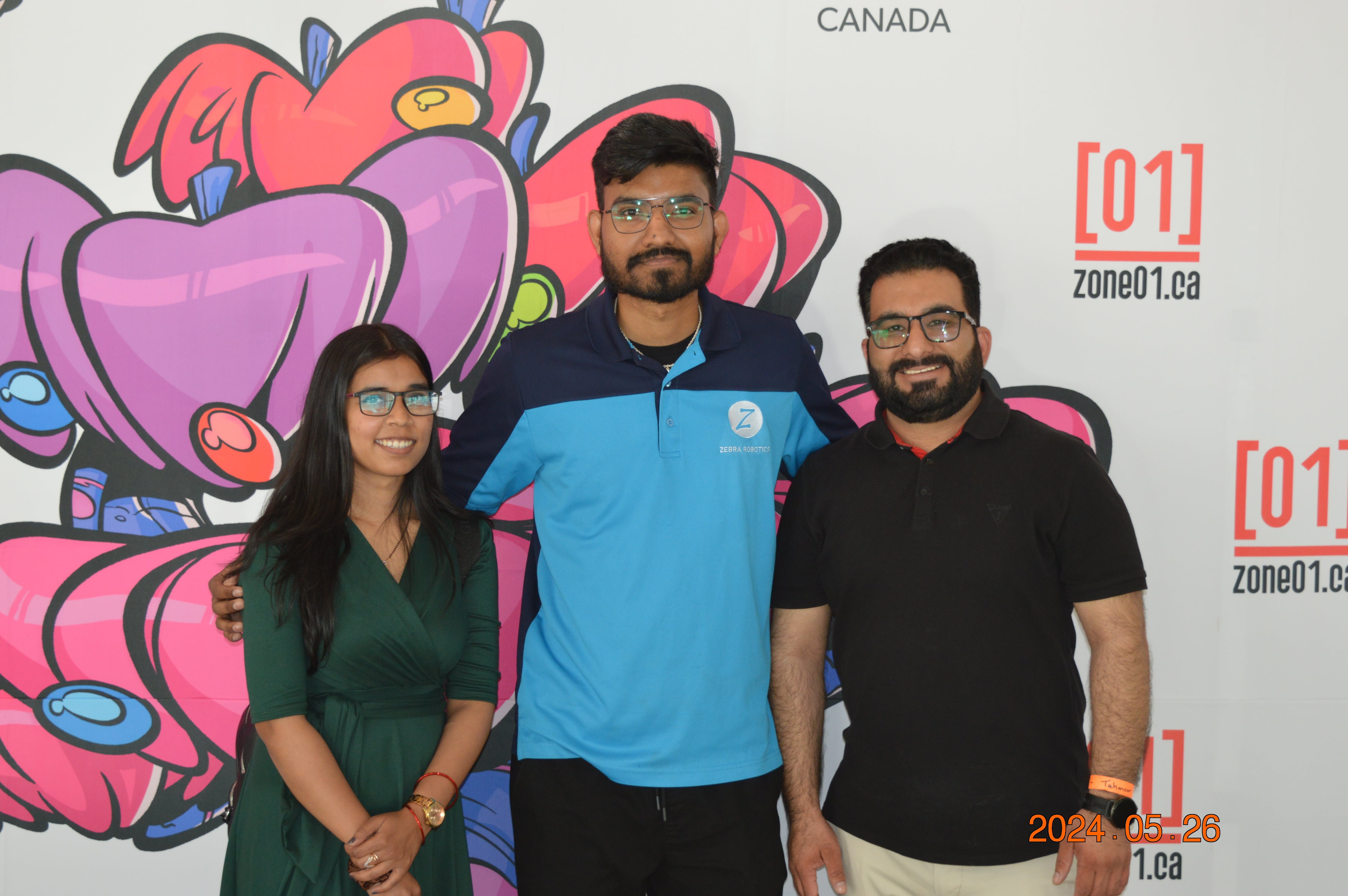
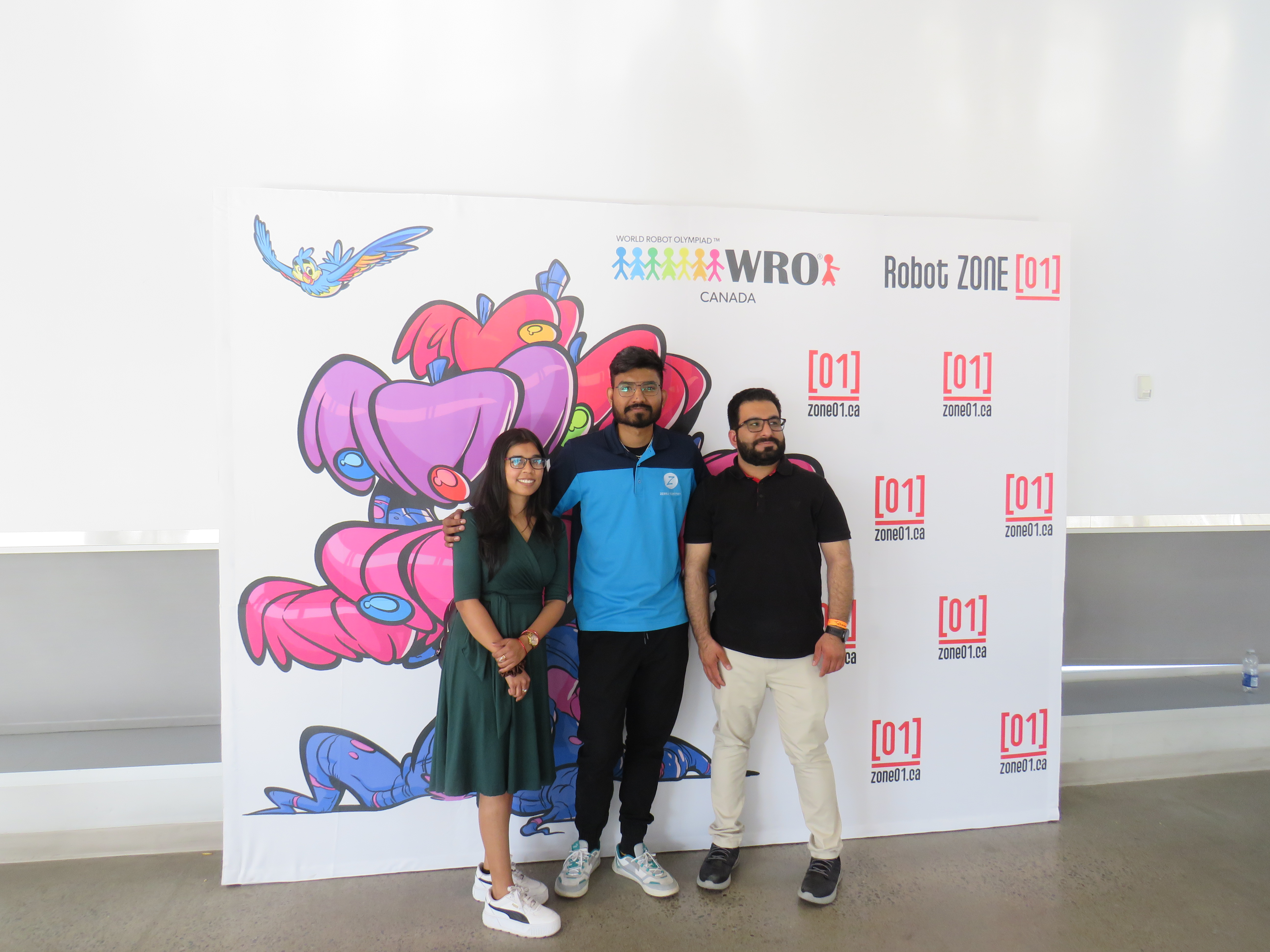
This week, two of our Zebra Robotics teams are packing their robots, passports, and dreams — and heading to Panama City for the World Robot Olympiad (WRO) 2025 Open Championship, happening October 19–21, 2025.
These young innovators will join hundreds of students from across the Americas, each showcasing their creativity and problem-solving skills under the WRO theme: “The Future of Robots“
Meet the Teams
Team Berry Teddy – Zebra Meadowvale (RoboSports Category)
Led by students Teddy, Tea, Maria, and Sarvesh, Team Berry Teddy will represent Canada in the RoboSports challenge — a fast-paced, dynamic category that blends robotics design with athletic coordination and teamwork. Their robot’s agility and precision have impressed judges throughout the season, and they’re ready for the global stage.
Team Pink Boba Pearls – Zebra Ajax (Future Engineers Category)
Representing Zebra Ajax, Swara and Sadhya make up Team Pink Boba Pearls, competing in Future Engineers — one of WRO’s most challenging and open-ended categories. Their custom-built autonomous vehicle showcases innovation, coding finesse, and design-thinking aimed at real-world transportation challenges.
Why WRO Panama Matters
The WRO Open Championship in Panama is one of the key global stages for young robotics minds. Teams from across North and South America will compete, collaborate, and learn from each other in a vibrant exchange of ideas, creativity, and technology. More details: WRO International Events – Panama 2025
Words from Zebra Robotics
“We are incredibly proud of both teams,” said Vikram, Coach at Zebra Robotics. “They’ve worked tirelessly — from mechanical builds to coding refinements — and they embody the spirit of innovation we aim to foster.”
“This journey is about so much more than competition,” added Karpakam. “It’s about learning, collaboration, and celebrating curiosity.”
Wishing Them the Best
As Berry Teddy and Pink Boba Pearls take flight to Panama, the entire Zebra Robotics community — students, coaches, and families — is cheering them on. No matter the outcome, they’ve already won by inspiring others and representing Canada with passion and creativity.
Follow us on Instagram, Facebook, and LinkedIn for updates, photos, and behind-the-scenes moments from the event!
At Zebra’s STRIPE competitions since 2022, we’ve noticed something beautiful: the most successful teams aren’t always the ones with the fanciest robots. They’re the ones whose coaches have mastered the delicate art of teaching kids how to think, not what to think.
You know that moment when a student’s eyes light up—not because they got the right answer, but because they finally understand the question? That’s where the real magic happens in robotics mentorship.
Let me introduce you to three such mentors who’ve left permanent fingerprints on our programs.Their approaches are as different as their personalities, but they all share one secret ingredient: they remember what it felt like to be a beginner.
The Mentor Who Says Less to Teach More
You’ll find Coach Sanjana in her natural habitat: sitting cross-legged on the floor surrounded by frustrated middle schoolers, asking dangerous questions like:
“What would happen if we tried the exact opposite of what the instructions suggest?”
Her superpower? Silence. She’ll watch a robot fail spectacularly three times before gently asking, “What pattern do you see in these crashes?” The moment when students realize she’s known the solution all along—but let them discover it themselves—is pure gold.
“During Last STRIPE season,” she told me, “a student rebuilt our entire chassis because I wouldn’t tell her which screw was loose. She named the robot ‘The Professor’ because it taught her more than I ever could.”
The Mentor Who Builds Families, Not Just Teams
Coach Tahmoor runs his team like a tiny startup where everyone has two titles: their technical role and their human role. You might be the “Lead Programmer and Chief Encouragement Officer” or the “Hardware Specialist and Conflict Resolver.”
His secret weapon? The “Before We Build” ritual:
Share one non-robotics thing happening in your life
Name one teammate’s strength you’re grateful for
Predict one thing that will go wrong today (and laugh about it in advance)
“We thought we’d lost our star coder when her family relocated last November,” Tahmoor remembers. “But every Tuesday at 4 PM, without fail, her pixelated face would appear on our laptop screen, troubleshooting code from 2,000 miles away. Some bonds outlast zip codes.”
The Mentor Who Keeps the Play in Programming
Coach Vikram workspace looks like a mad scientist’s birthday party. There’s a “Wall of Epic Fails” celebrating broken prototypes, a few drone bots, and a couple of 3d printers
His philosophy? “If you’re not occasionally laughing so hard that soda comes out your nose, you’re doing robotics wrong.”
When tensions run high before competitions, he’ll suddenly announce: “Emergency dance party! Your robot can’t learn from stressed-out humans.” The kids groan every time—and every time, it works.
“The real win isn’t trophies,” Vikram says. “It’s when alumni visit and say, ‘I chose my major because of how you made circuits feel like play.’”
The Thread That Connects Them
What makes these Zebra mentors extraordinary isn’t their technical expertise (though they have plenty). It’s that they:
Listen to what students aren’t saying (the nervous fidgeting, the hesitation to ask for help)
Remember that robotics is just the vehicle for teaching resilience and creativity
Measure success in lightbulb moments, not just scoreboard results
As one parent wrote to us: “My daughter came home and said, ‘My coach believes in me more than I believe in myself.’ That’s the kind of math that really adds up.”
To all the mentors reading this—whether you’re with Zebra or cheering from elsewhere—thank you for being the quiet force behind so many young discoverers.The robots are lucky to have you.
“Young students working on a coding project, exploring the intersection of AI and robotics at Zebra Robotics.”
Artificial Intelligence (AI) is transforming industries, automating tasks, and reshaping the way we work. As AI becomes more advanced, many people are asking: “What is the impact of AI on the need for coding knowledge?” and “Does AI make coding less necessary?” At Zebra Robotics, we believe that the rise of AI makes coding education more important than ever. Here’s why.
What is the Impact of AI on the Need for Coding Knowledge?
AI is undoubtedly changing the coding landscape, but it’s not replacing the need for coding knowledge—it’s enhancing it. Here’s how:
Coding as a Foundation for AI: Understanding coding is essential for working with AI. Whether it’s writing algorithms, debugging AI models, or integrating AI into applications, coding remains a critical skill.
AI as a Tool, Not a Replacement: AI is a powerful tool that can automate repetitive tasks, but it still requires human oversight and input. Coders are needed to design, train, and refine AI systems.
New Opportunities in AI Development: The rise of AI has created new roles in machine learning, data science, and AI ethics, all of which require strong coding skills.
Does AI Make Coding Less Necessary? Are Coders’ Jobs at Risk?
While AI can automate certain aspects of coding, it doesn’t make coding less necessary—it shifts the focus of what coders do. Here’s why coders’ jobs aren’t at risk:
AI Can’t Replace Creativity and Problem-Solving: AI excels at common tasks, but it lacks creating custom solutions that is specific to a particular business problem, the creativity and critical thinking skills that human coders bring to the table are hard to be replace. Coders are needed to solve complex problems, design innovative solutions, and think outside the box.
The Human Touch in Coding: Coding isn’t just about writing lines of code—it’s about understanding user needs, designing intuitive interfaces, and creating meaningful experiences. These are areas where human coders excel.
AI Creates More Jobs Than It Replaces: According to the World Economic Forum, AI is expected to create 97 million new jobs by 2025, many of which will require coding skills.
“Zebra Robotics students celebrate their success at STRIPE competition, showcasing their coding and problem-solving skills.”
Why Learning to Code is More Important Than Ever
As AI continues to evolve, coding education becomes even more critical for the next generation. Here’s why:
Critical Thinking and Problem-Solving: Learning to code helps children develop essential skills like logical reasoning, algorithmic thinking, and debugging—skills that are crucial in an AI-driven world.
Kids for Future Careers: Whether it’s developing AI systems, working in cybersecurity, or designing apps, coding is a foundational skill for many high-demand careers.
Creativity and Innovation: Coding empowers children to bring their ideas to life, whether it’s creating a game, building a robot, or developing an AI-powered app.
Resilience and Adaptability: In a world where technology is constantly changing, coding teaches children to adapt, learn new tools, and embrace challenges.
“The Zebra Robotics logo, representing our commitment to empowering the next generation of coders and innovators.”
Zebra Robotics: Preparing Kids for an AI-Driven Future
At Zebra Robotics, we’re committed to helping children develop the skills they need to thrive in an AI-driven world. Our programs:
Introduce kids to coding and robotics through hands-on, project-based learning.
Teach critical thinking, problem-solving, and creativity—skills that AI can’t replicate.
Provide a supportive environment where kids can explore, experiment, and innovate.
The rise of AI doesn’t make coding less important—it makes it more essential than ever. By learning to code, children develop the skills they need to succeed in a technology-driven world, from critical thinking and problem-solving to creativity and innovation. At Zebra Robotics, we’re proud to empower the next generation of coders, innovators, and problem-solvers.
Coach Ram guiding young innovators as they tackle robotics challenges at the STRIPE Competition. With teamwork, strategy, and problem-solving at play, these students are preparing to push the boundaries of STEM learning!
In today’s fast-paced, information-rich world, critical thinking skills are more important than ever. These skills empower individuals to analyze information objectively, evaluate evidence, and make informed decisions. For parents in British Columbia (BC), where the demand for STEM education is growing, robotics and coding offer a unique and engaging way to help children develop these essential skills. At Zebra Robotics, we’re proud to bring our innovative programs to BC, fostering the next generation of critical thinkers and problem-solvers.
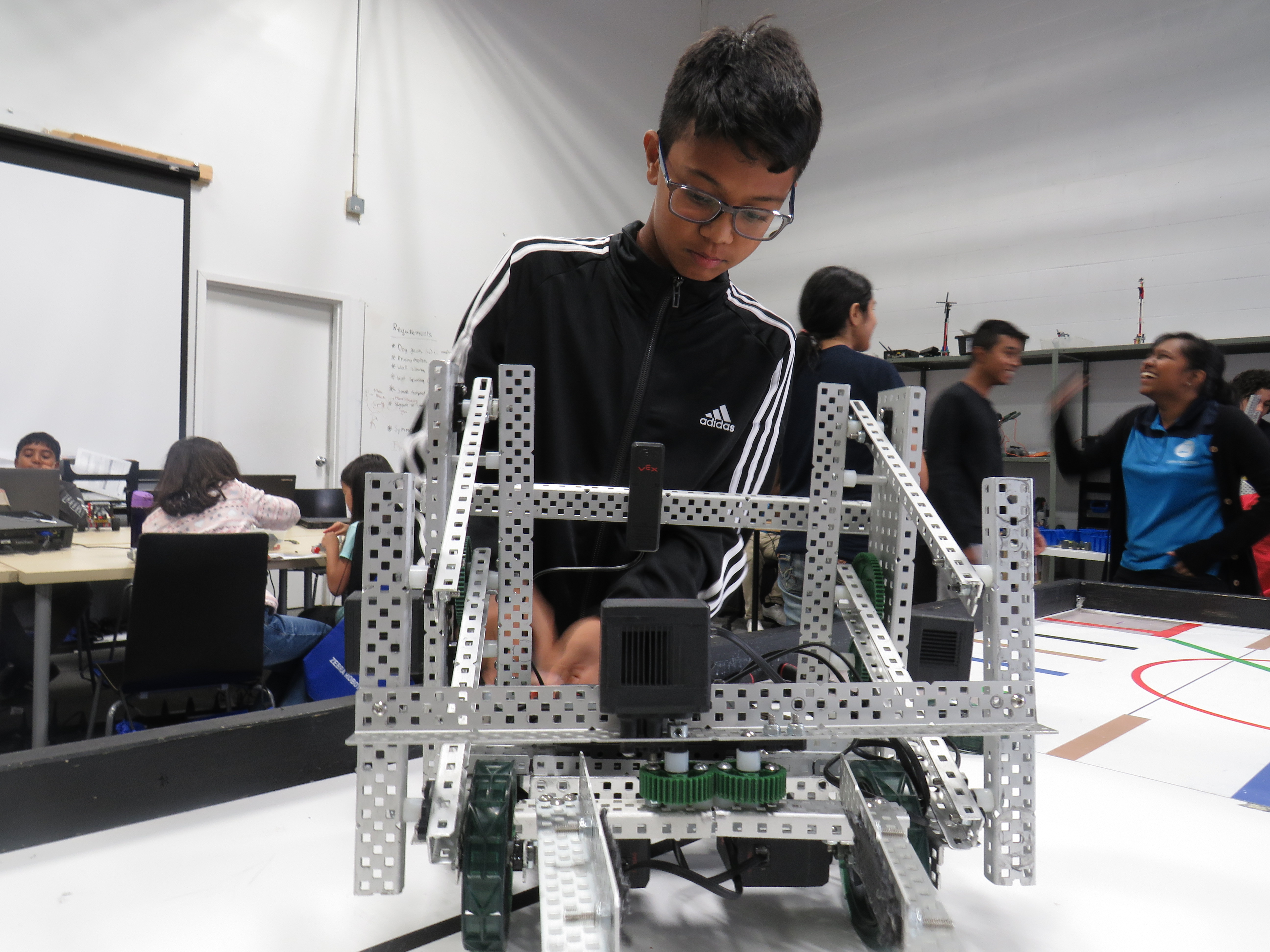
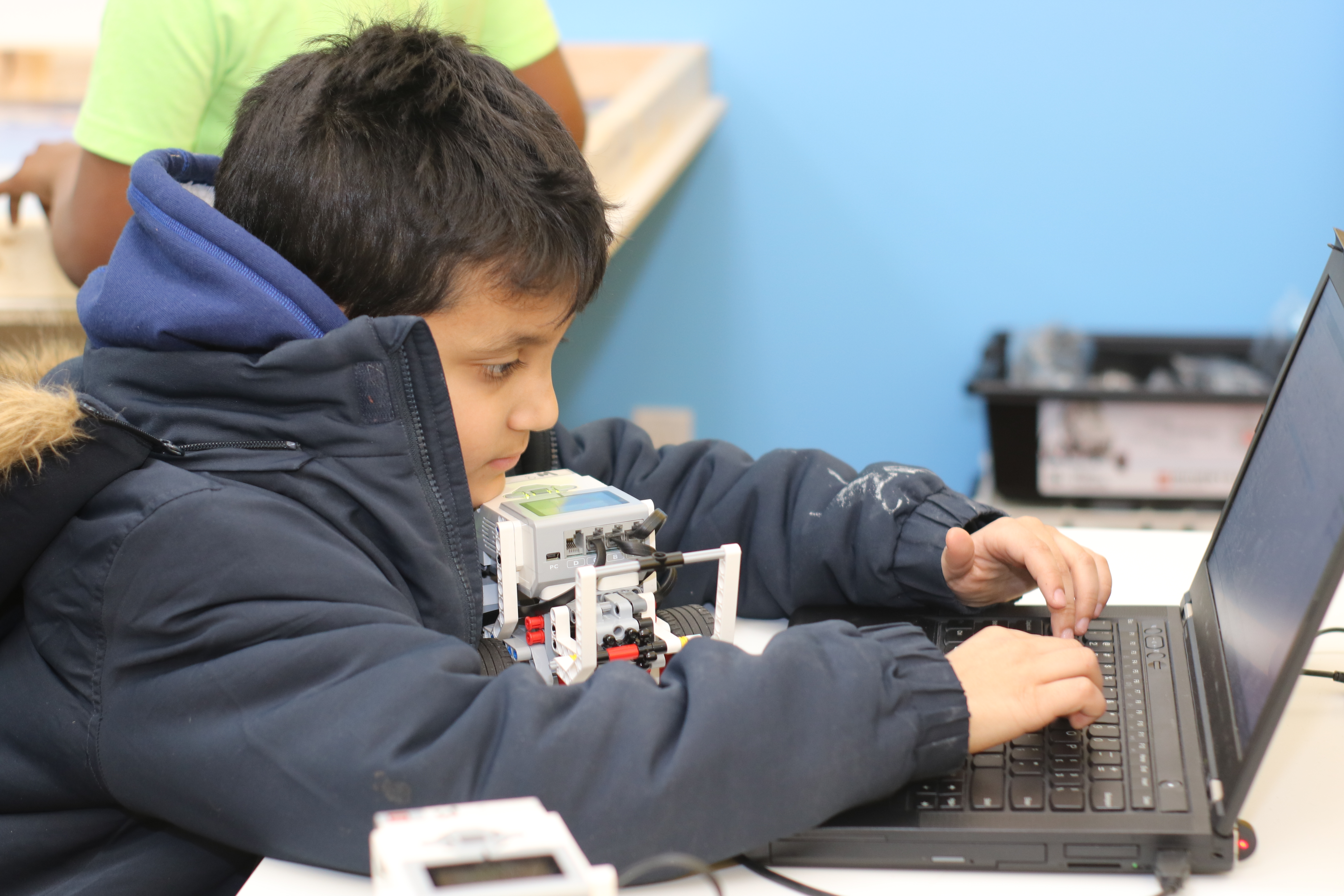
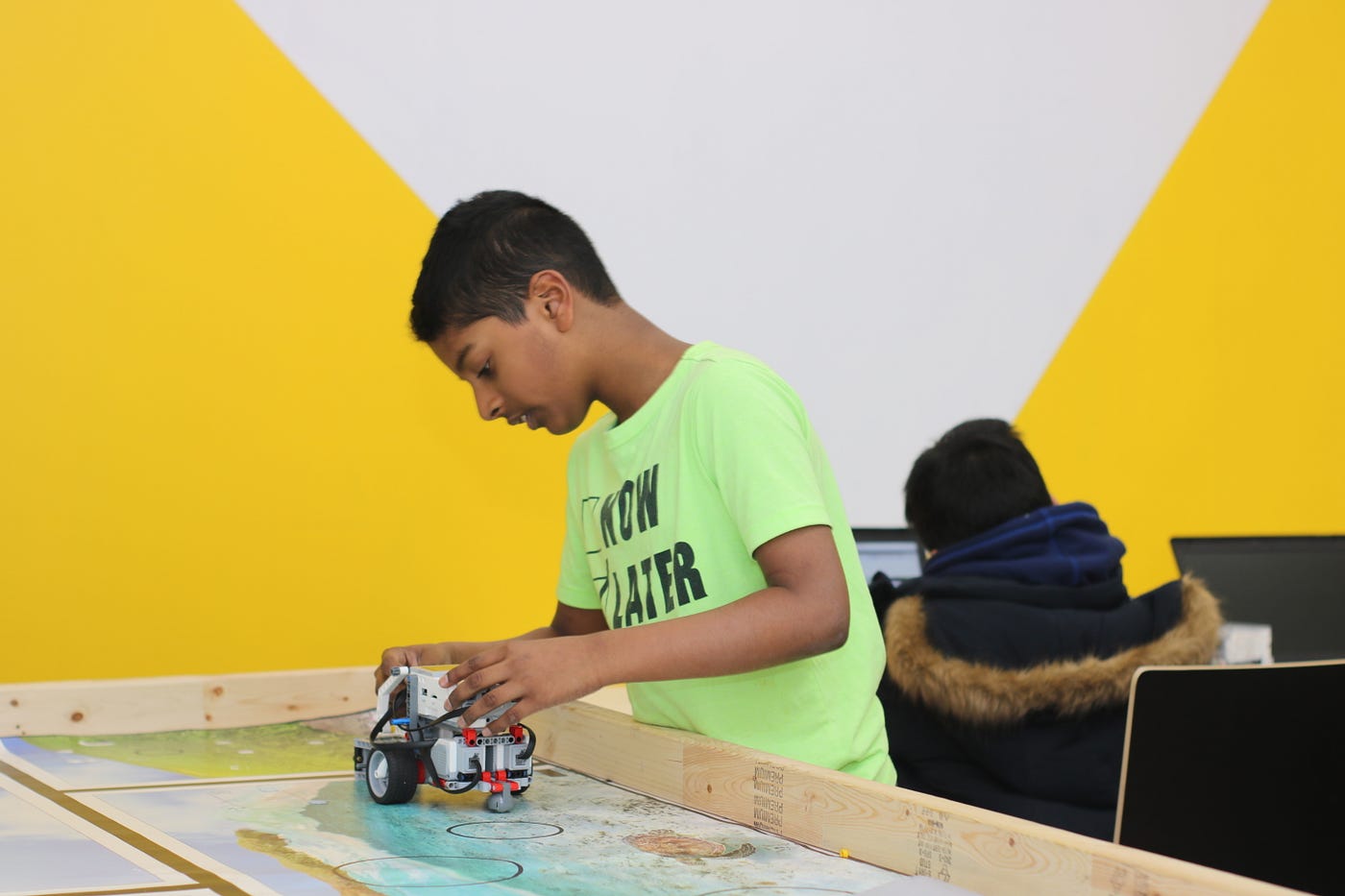
Precision, creativity, and engineering in action! A dedicated young innovator fine-tunes his robot, bringing ideas to life through hands-on STEM learning at Zebra Robotics.
How Robotics Enhances Critical Thinking
Problem Identification and Analysis: Robotics projects often present complex challenges that require students to identify the root cause of problems and analyze potential solutions. For example, building a robot to navigate a maze involves understanding the problem, brainstorming solutions, and evaluating the best approach.
Design and Planning: Designing and building a robot involves careful planning. Students must consider factors like functionality, materials, and programming, which enhances their ability to think strategically and plan effectively.
Testing and Iteration: The process of testing and refining a robot encourages students to analyze results, identify areas for improvement, and iterate on their designs. This iterative process is at the heart of critical thinking and innovation.
Troubleshooting: When a robot doesn’t work as expected, students must use their critical thinking skills to diagnose the problem and find a solution. This hands-on problem-solving builds resilience and adaptability.
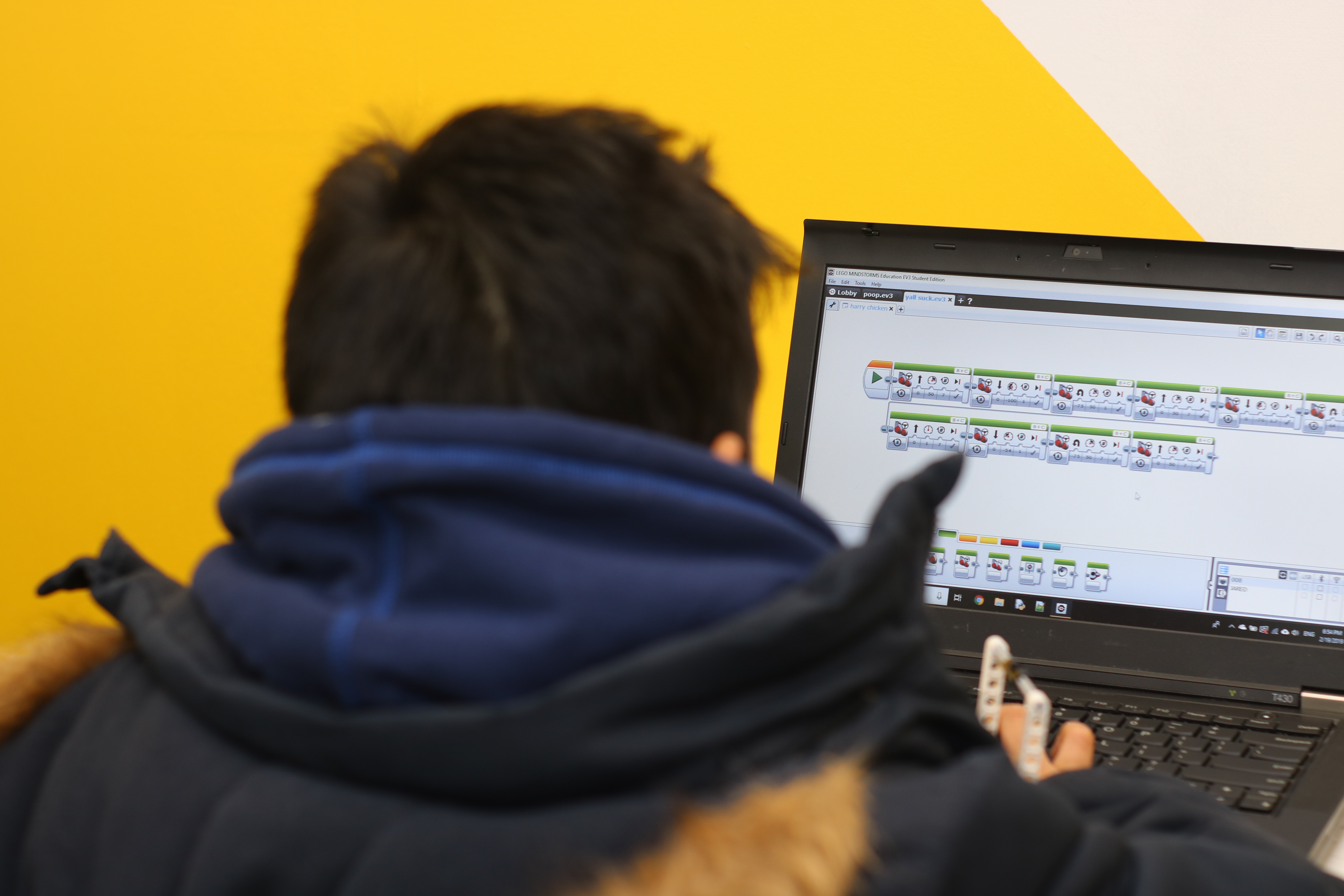
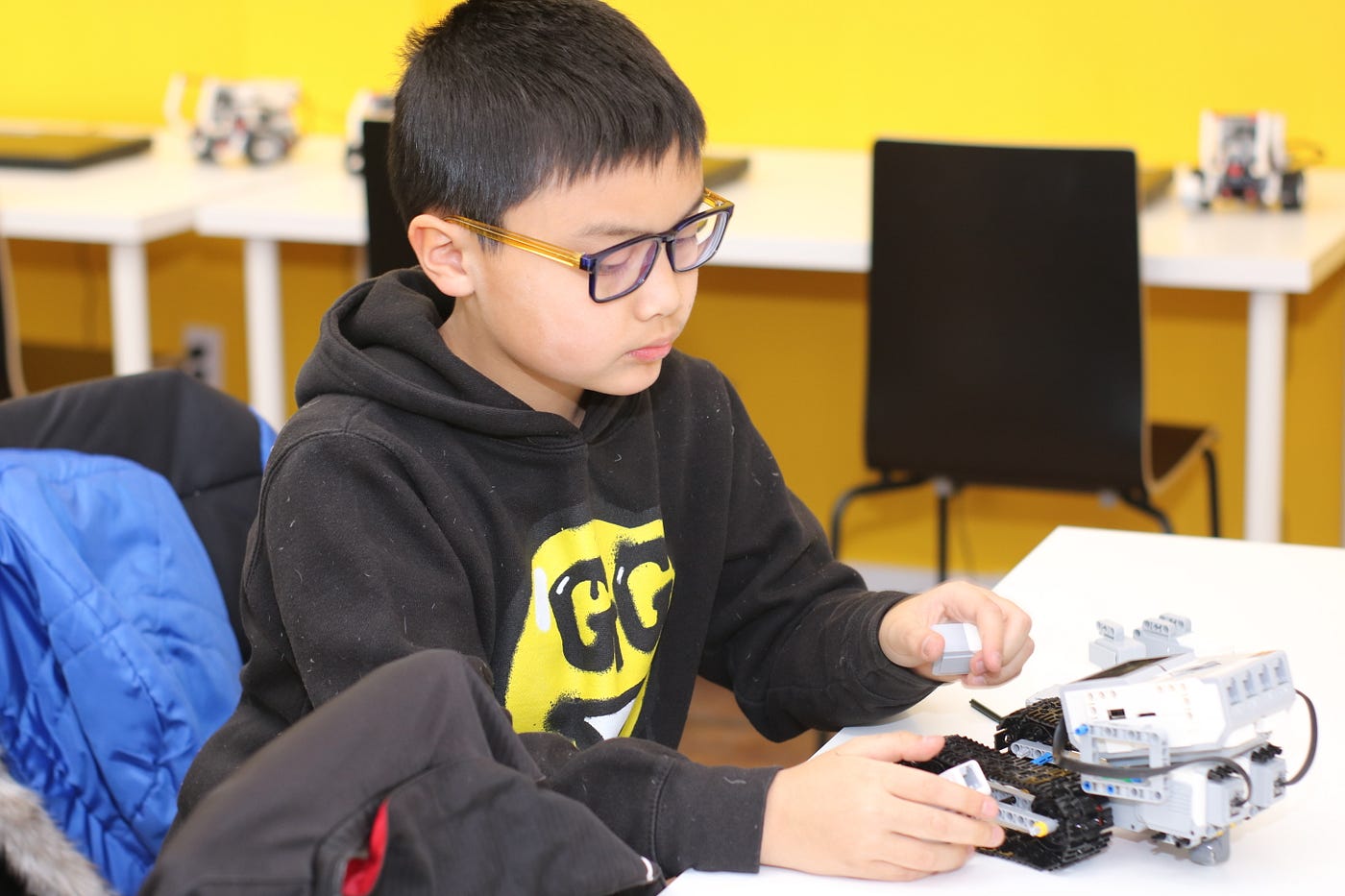
Programming the future—one block at a time! A young coder focuses on refining their LEGO robotics project, turning creativity into code at Zebra Robotics.
How Coding Enhances Critical Thinking
Logical Reasoning: Coding involves breaking down complex tasks into smaller, logical steps. This process strengthens logical reasoning skills, helping students approach problems methodically.
Algorithmic Thinking: Creating algorithms requires students to think systematically and develop step-by-step instructions for a computer to follow. This skill is essential for solving real-world problems efficiently.
Debugging: Identifying and fixing errors in code requires careful analysis and attention to detail. Debugging teaches students to think critically and persist through challenges.
Abstract Thinking: Coding often involves working with abstract concepts and data structures, which helps students develop abstract thinking skills. This ability to think beyond the concrete is crucial for innovation.
“Critical thinking is the foundation of innovation, and at Zebra Robotics, we believe every child has the potential to think critically, solve problems, and create a better future. Through robotics and coding, we’re empowering students in British Columbia to tackle challenges, think creatively, and build the skills they need to thrive in a technology-driven world.” – Satish Thiyagarajan, Co-founder and CEO, Zebra Robotics
Zebra Robotics: Fostering Critical Thinking Through Robotics and Coding
At Zebra Robotics, we’re committed to helping students in British Columbia develop critical thinking skills through our hands-on programs:
Challenging Projects: Our robotics and coding projects are designed to push students to think critically and creatively.
Project-Based Learning: We use a project-based approach that encourages experimentation, collaboration, and problem-solving.
Expert Guidance: Our experienced instructors provide the support and mentorship students need to succeed.
Why Choose Zebra Robotics in BC?
As we expand into British Columbia, we’re excited to bring our award-winning programs to families in the region. Here’s why parents in BC are choosing Zebra Robotics:
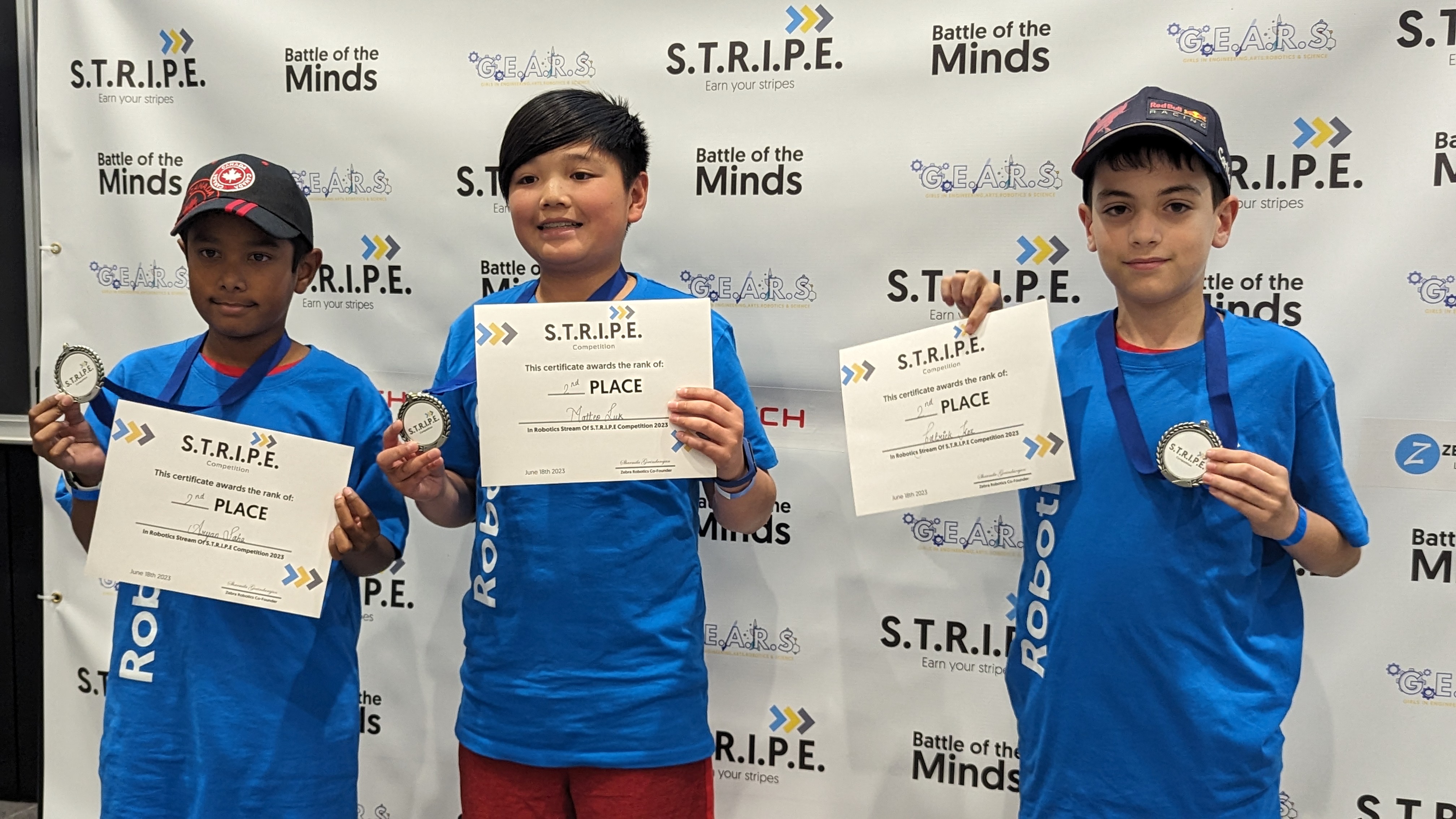
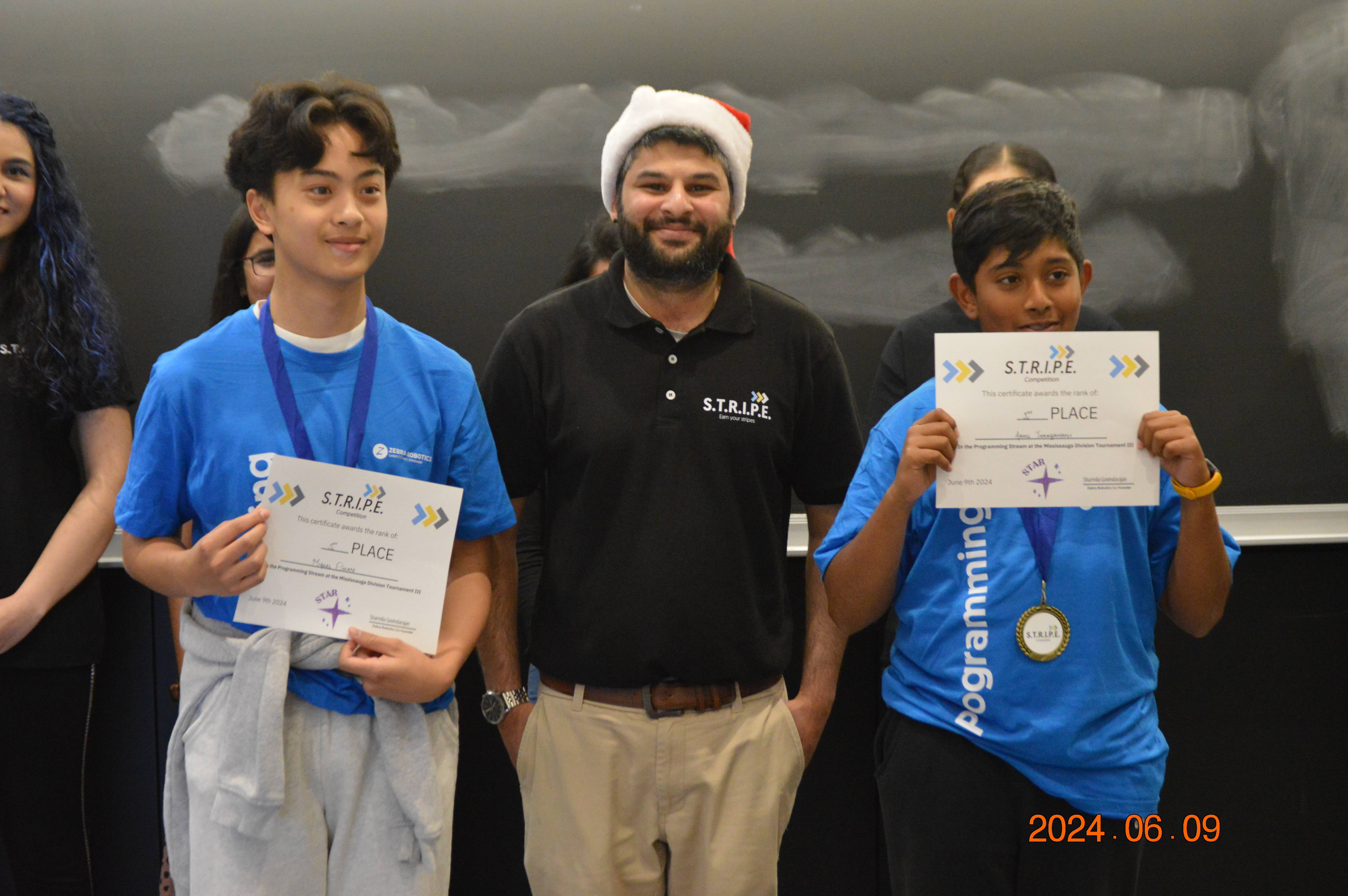
Coach Asad proudly poses with his team of young innovators after their big win at the STRIPE Competition! Celebrating their hard-earned certificates!
Local Impact: We’re dedicated to supporting BC’s growing demand for STEM education and preparing students for future careers in technology and innovation.
Engaging Learning: Our programs make learning fun and interactive, ensuring students stay motivated and inspired.
Robotics and coding are more than just technical skills, they’re powerful tools for developing critical thinking, problem-solving, and innovation. By enrolling your child in Zebra Robotics, you’re giving them the opportunity to build these essential skills in a fun and engaging environment.
Ready to help your child develop critical thinking skills through robotics and coding? Visit our BC location page to learn more about our programs and register today!
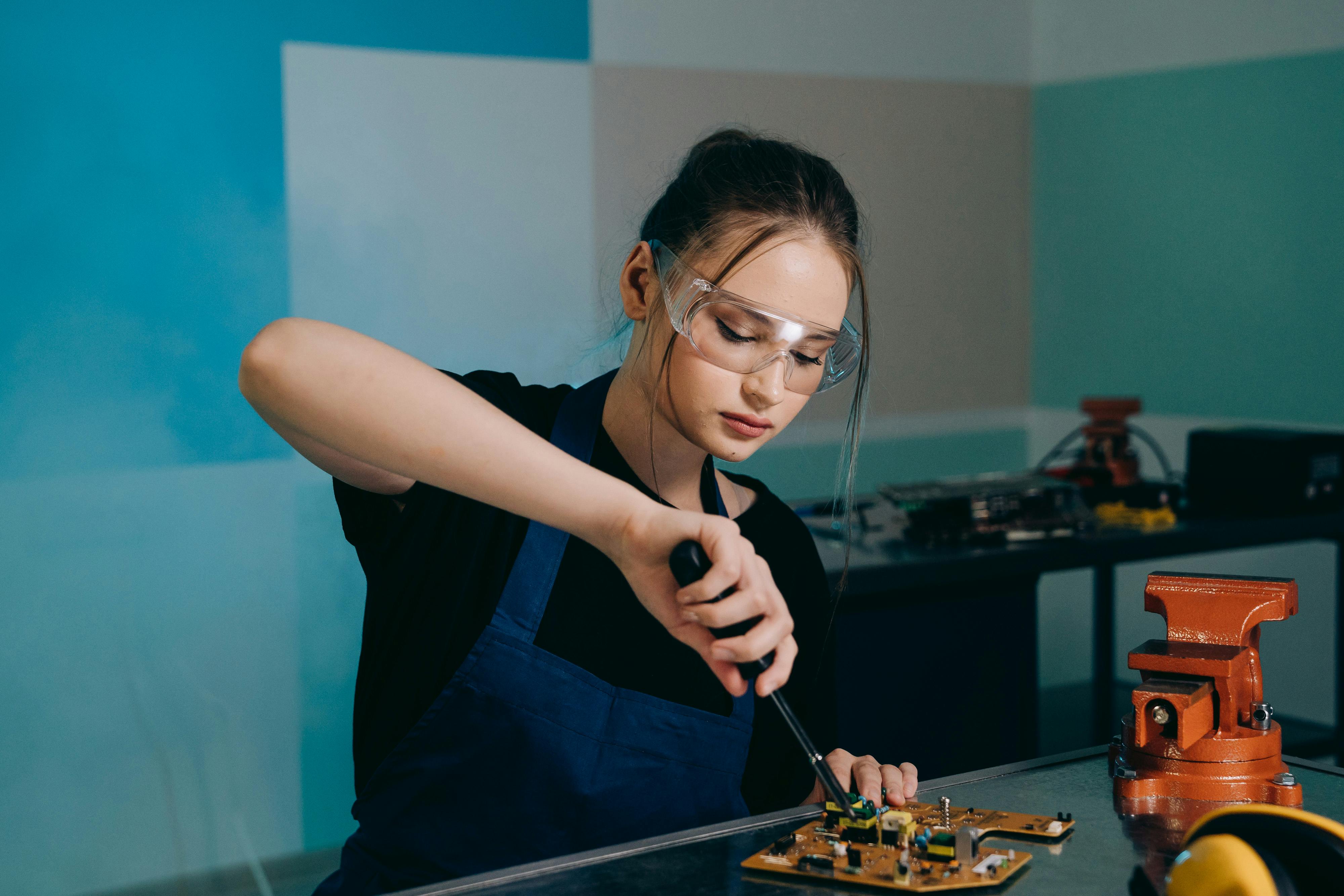
A young woman applies STEM skills, assembling an electronic circuit with focus and precision.
British Columbia is a thriving hub for Science, Technology, Engineering, and Mathematics (STEM) careers, with industries like technology, clean energy, life sciences, and natural resources driving the province’s economy. As a parent, you want to prepare your child for a future filled with opportunities. At Zebra Robotics, we’re excited to bring our award-winning STEM programs to BC, helping students develop the skills they need to succeed in these high-demand fields.
A Glimpse of Innovation: The Microsoft Building in BC
BC’s economy is rapidly evolving, and STEM skills are at the heart of this transformation. Here’s why STEM education is more important than ever for your child’s future:
Growing Job Market:
BC is home to over 10,000 tech companies, including giants like Amazon, Microsoft, and Electronic Arts (EA), all of which have a significant presence in the province.
The province is also a leader in clean technology, life sciences, and sustainable resource management, creating thousands of jobs for skilled professionals.
Future-Proof Skills:
STEM careers are among the fastest-growing and highest-paying in BC.
By 2025, it’s estimated that 80% of jobs in BC will require STEM-related skills.
Solving Real-World Problems:
From developing renewable energy solutions to advancing healthcare technologies, STEM professionals are tackling some of the world’s biggest challenges.
As we expand into British Columbia, we’re committed to helping students unlock their potential and explore exciting STEM career paths. Here’s what sets Zebra Robotics apart:
Hands-On Learning:
Our programs focus on robotics, coding, and engineering, giving students practical experience with cutting-edge technologies.
Through fun, interactive projects, students learn to design, build, and program robots, preparing them for real-world challenges.
Skill Development:
We teach critical thinking, problem-solving, and collaboration—skills that are essential for success in STEM careers.
Students also gain confidence in public speaking and teamwork through presentations and group projects.
As part of our expansion into BC, we’re tailoring our programs to align with the province’s unique STEM opportunities, such as clean energy and technology innovation.
“STEM education isn’t just about learning skills—it’s about empowering the next generation to solve the world’s biggest challenges. At Zebra Robotics, we’re proud to help students in BC unlock their potential and prepare for a future full of opportunities.” – Satish Thiyagarajan, Co-founder and CEO, Zebra Robotics
Here’s a closer look at some of the exciting STEM careers your child could pursue in BC:
Technology:
Roles: Software Developer, Data Scientist, AI Engineer, Game Designer.
Why It’s Hot: Vancouver is one of Canada’s fastest-growing tech hubs, with companies like Amazon, Microsoft, and Electronic Arts (EA) driving demand for tech talent.
Clean Technology:
Roles: Renewable Energy Engineer, Environmental Consultant, Sustainability Specialist.
Why It’s Hot: BC is a global leader in clean energy, with initiatives like CleanBC driving innovation and job growth.
Life Sciences:
Roles: Biotechnologist, Medical Researcher, Pharmaceutical Developer.
Why It’s Hot: BC’s life sciences sector is rapidly expanding, with world-class research institutions and companies.
Why It’s Hot: BC’s rich natural resources create opportunities for sustainable development and innovation.
As we launch our programs in British Columbia, we invite parents and students to join us in exploring the exciting world of STEM. Visit our STEM programs page to learn about our robotics and coding classes, or check out our locations page to discover a Zebra Robotics center near you. Encourage your child to participate in the STRIPE Competition, FIRST LEGO League (FLL), or VEX Robotics Competition to showcase their skills and creativity.
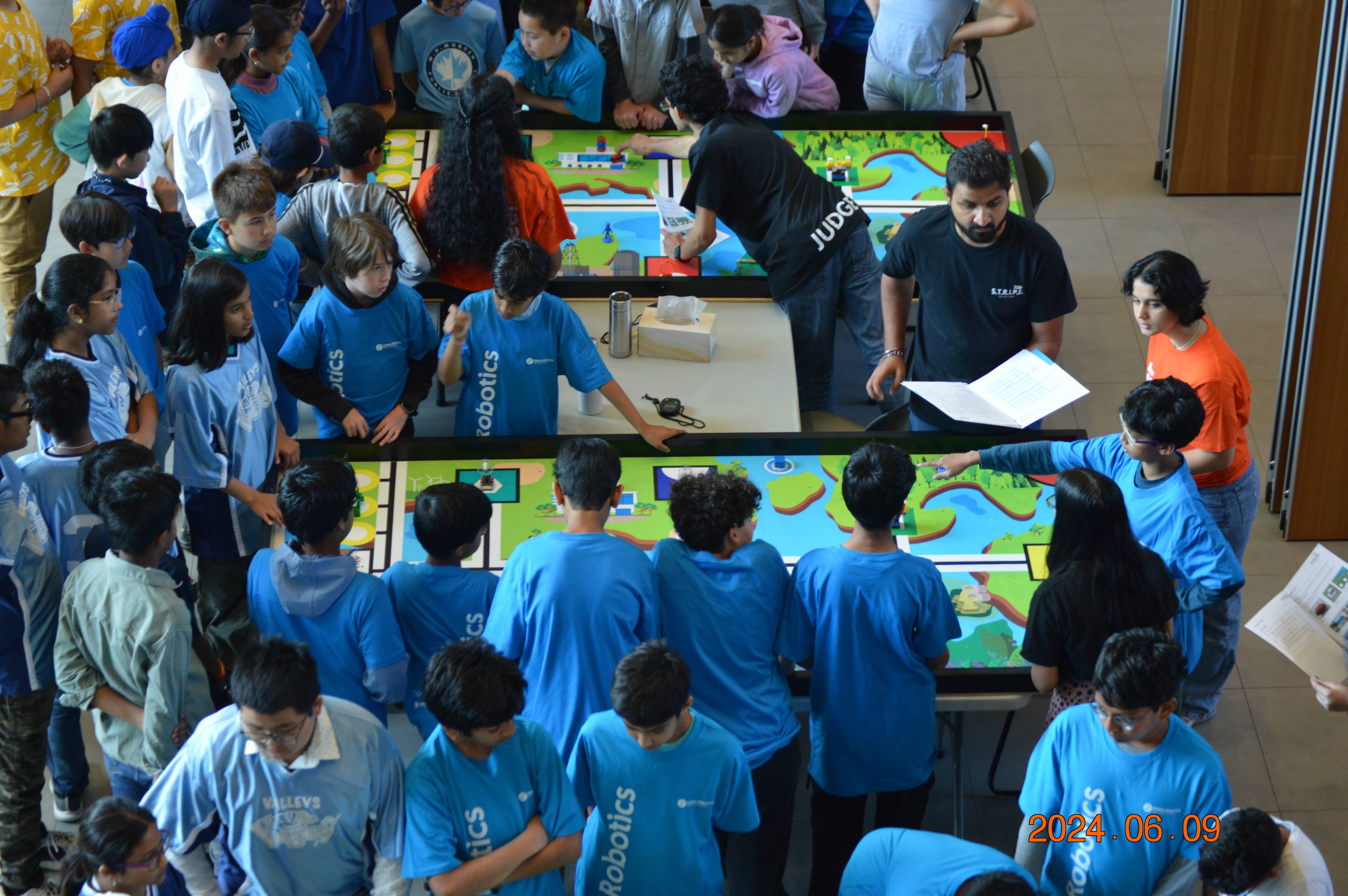
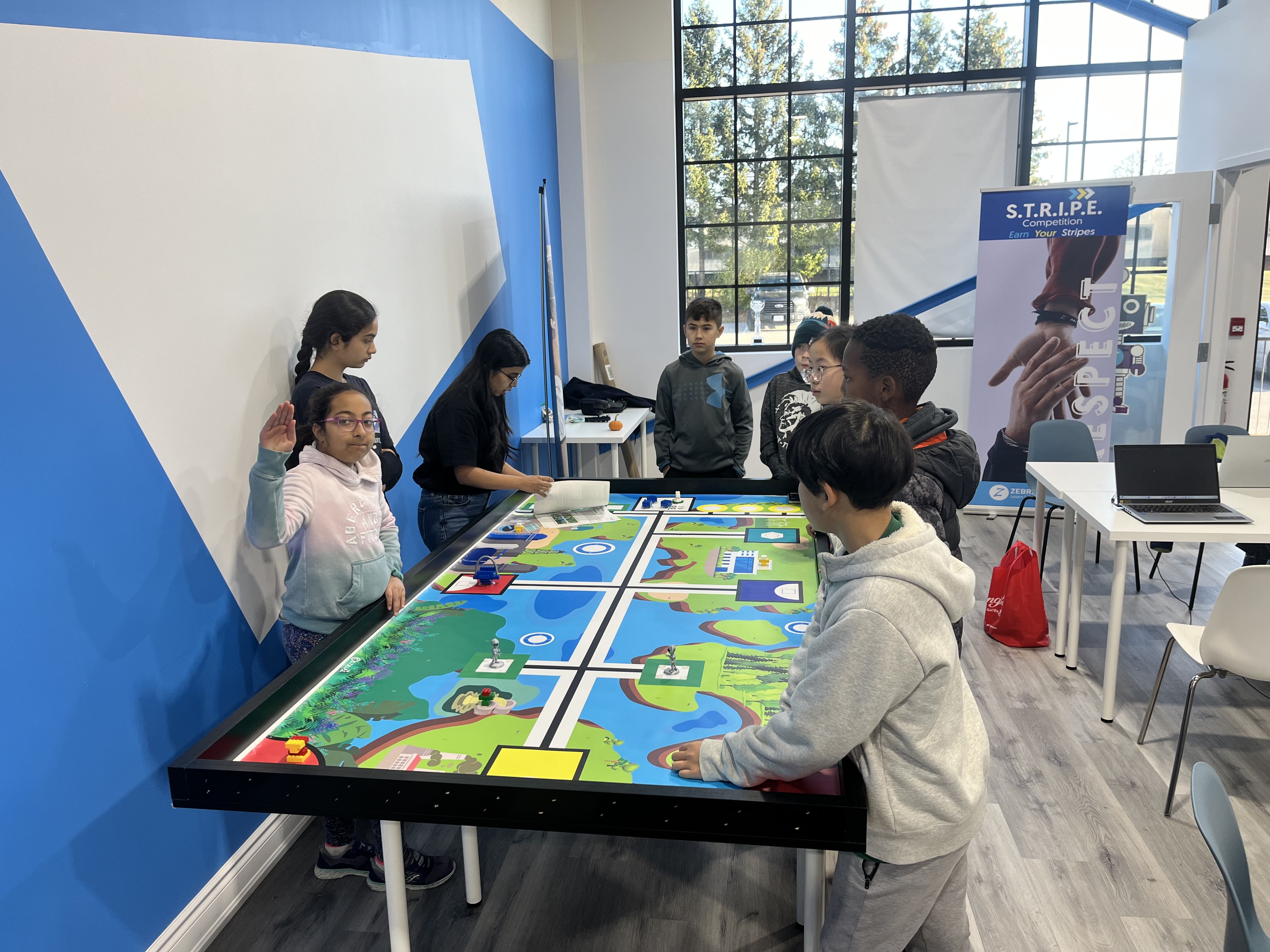
Students gear up for the STRIPE competition, putting their problem-solving and teamwork skills to the test in this interactive robotics challenge!
The future of work is here, and STEM skills are the key to unlocking endless opportunities for your child. At Zebra Robotics, we’re proud to bring our innovative programs to British Columbia, helping students build the skills they need to thrive in a rapidly changing world.
British Columbia is known for its stunning landscapes and passionate sports culture. From cheering on the Canucks to watching kids score goals on the soccer field, sports play a vital role in our communities. But in today’s rapidly changing world, there’s another set of skills that are just as crucial for your child’s future success: STEM (Science, Technology, Engineering, and Mathematics).
Why Sports Are Great AND Why STEM is Equally Important:
Young Innovator at Work: Hands-on with robotics and coding, igniting a passion for STEM from an early age
We understand the value of sports. They teach teamwork, discipline, physical fitness, and resilience. These are all essential life skills. But STEM education offers a complementary set of advantages that are equally important in the 21st century:
Problem-Solving: STEM teaches children how to approach challenges logically and creatively, skills that are invaluable in any field.
Critical Thinking: In a world of information overload, STEM empowers kids to analyze data, evaluate evidence, and make informed decisions.
Innovation and Creativity: STEM fosters a spirit of innovation and encourages kids to think outside the box, leading to new ideas and solutions.
Future Career Opportunities: The demand for STEM professionals is growing rapidly. By giving your child a STEM foundation, you’re opening doors to a wide range of exciting career paths.
Adaptability in a Changing World: The world is constantly evolving, and STEM skills help kids adapt to new technologies and challenges.
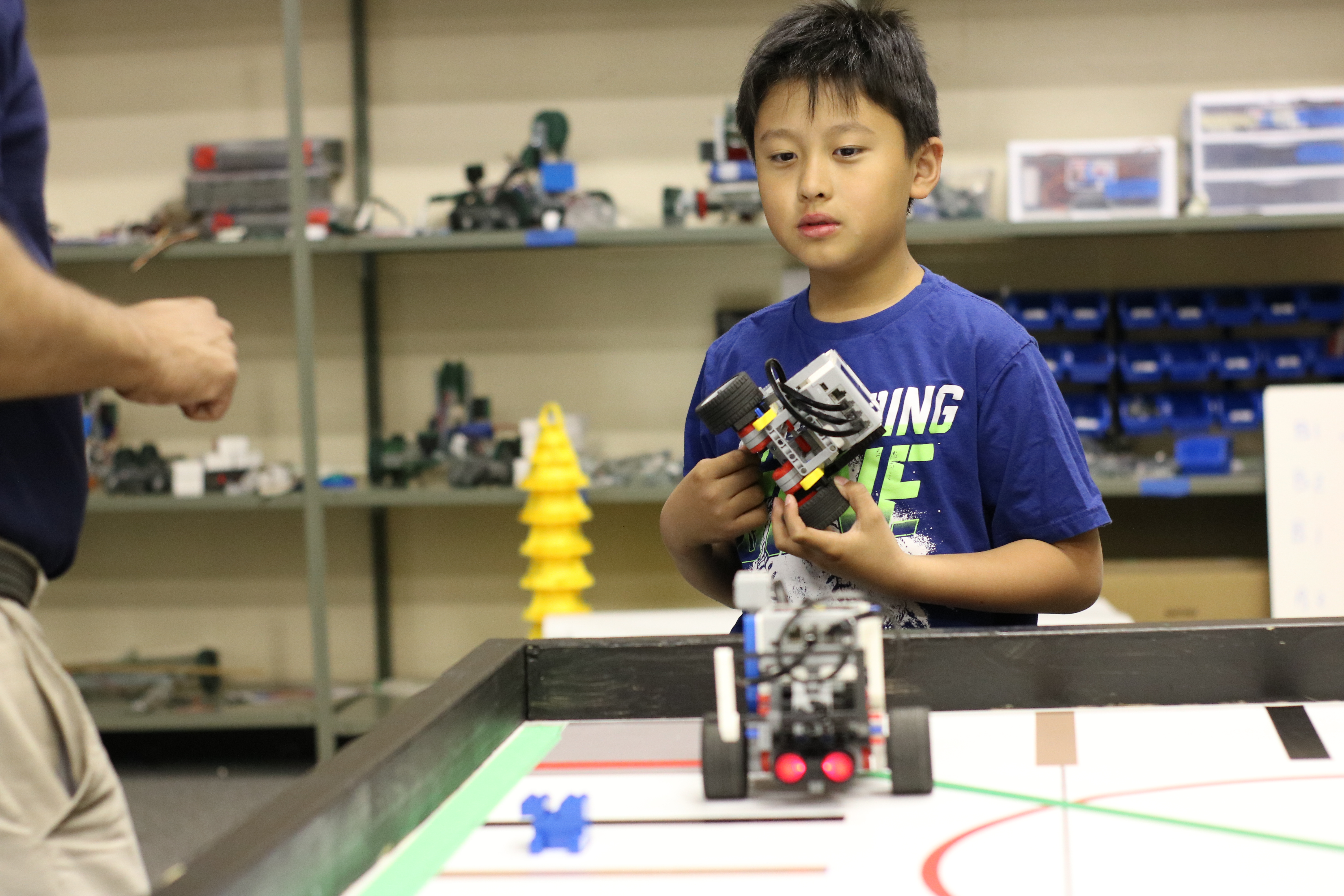
Exploring the world of robotics: A young creator fine-tunes his robot for a hands-on learning experience in problem-solving and innovation
How STEM Complements Sports:
STEM isn’t about replacing sports; it’s about providing a well-rounded education. Think of it this way:
Sports build physical strength and teamwork. STEM builds mental strength and problem-solving.
Sports teach discipline and perseverance. STEM teaches critical thinking and innovation.
By combining sports and STEM, you’re giving your child the best of both worlds: a healthy body and a sharp mind, setting them up for success in all aspects of life.
Zebra Robotics: Where STEM Comes to Life:
Bringing ideas to life: A budding engineer programs his robot for the ultimate test of creativity and functionality
At Zebra Robotics, we make STEM learning fun and engaging. Our hands-on programs in robotics and coding allow kids to:
Build and program their own robots.
Develop problem-solving and critical thinking skills.
Collaborate with peers and learn teamwork.
Explore exciting STEM concepts in a supportive environment.
Just as you invest in your child’s athletic development, investing in their STEM education is an investment in their future. By embracing both sports and STEM, you’re giving your child the tools they need to thrive in the 21st century and beyond.
Visit our https://www.zebrarobotics.com/surrey to learn more about our programs and how we can help your child discover the exciting world of STEM!
Zebra Robotics is working with Zed Jamaica and Mars Business Solutions to teach robotics and technology courses to students in Jamaica
Zebra Co-Founder Satish Thiyagarajan with Mars Business Solutions
Zebra Robotics will be partnering with Zed Jamaica and Mars Business Solutions to bring robotics and technology education to youth in Jamaica this summer. The collaboration is the result of months of planning and brings Zebra’s innovative STEM curriculum to Jamaican students.
One of the key partners is Zed Jamaica, an organization that currently works with schools on the island to distribute resources and technological solutions. Mars Business Solutions is another partner based in Canada that is providing logistics support for the classrooms in Jamaica.
“We all have the same goal of taking education to kids and wanting them to learn and grow from there,” said Jayendra Balasubramanian, Co-Founder of Zebra Robotics. “We feel we have a really good curriculum and a proven model that has worked in Canada and the U.S.”
After training with Zebra coaches, the staff in Jamaica will work with a pilot group of students learning to build robots and code them with Python in addition to working on basic electronics, circuits, and CAD design.
We all have the same goal of taking education to kids and wanting them to learn and grow from there. We feel we have a really good curriculum and a proven model that has worked in Canada and the U.S.
Jayendra Balasubramanian, Co-Founder of Zebra Robotics
The pilot program runs for a month, with students attending 4 days a week during July. Each student receives a technology kit that they can bring home to show their families and extend their learning beyond the classroom.
A key part of the partnership is a robust training program to equip teachers in Jamaica with the skills to keep students engaged while also meeting them where they are. Not only will students in Jamaica gain access to important STEM skills, but also the local educational community will get a chance to develop its knowledge base.
Zebra is excited for the opportunity to bring a proven STEM curriculum and model for education to the international community beyond North America
Ontario offers many regional learning choice programs for elementary students heading into middle school. Finding a program that keeps your child engaged and empowered can help avoid some of the academic pitfalls of the transition from elementary to middle school. It may seem like a lot of pressure to apply for a special program when your child is in elementary school, but there is research that suggests that working with motivated peers in a challenging environment can keep students moving toward success.
It’s important to keep up student interest when transitioning to middle school.
Programs for students interested in STEM include the Middle Years Programme of the International Baccalaureate and the SciTech program. Students whose interest in STEM is entrepreneurial would thrive in the International Business and Technology (IBT) program.
The Middle Years Programme from the International Baccalaureate (IB) is the program designed for students from ages 11–16. It’s a 5-year program, but in most Ontario schools this program runs from grade 6–8, which is common for the curriculum. This program introduces students to a cohort of highly-motivated peers working on learning that is attached to real world applications, in addition to following Ontario’s standard curriculum. There are 8 subject areas for students to focus on, and they must spend at least 50 hours on instruction in each area. The areas include: language acquisition, language and literature, individuals & societies, sciences, mathematics, arts, physical & health education, and design. The IB Global Research department has studied the impact of their Middle Years Programme and found that IB students were “on-task” 87% of the time, compared to 73% of the time for general education students. That equates to 8.4 minutes more time on task per hour, and almost an hour for a whole day of school.
The sciences and mathematics programs will be most interesting for STEM students, but the middle grades are also a time to develop core competencies in a wide range of subject areas. Language, design, and social sciences (individuals & societies) are helpful to even the most die-hard STEM enthusiast. Communicating your ideas and seeing how they impact others is crucial for any field. Global contexts and critical thinking are all core components of the Middle Years Programme.
Being accepted to the IB Middle Years Programme does not guarantee acceptance into the IB Diploma Programme in secondary school. However, students who study in the Middle Years Programme will likely be better prepared for the Diploma Programme if they’re not ready to move on to something else.
For a more hands-on experience, students can choose a Sci Tech program. This program also follows Ontario curriculum standards but focuses on technological inquiry, including robotics, coding, 3D printing, and video editing/animation, where facilities allow. The program focuses on stewardship, competence, and insight as driving ideas for inquiry-based education. Where the standard curriculum would build one model or test one application, the sci tech program spends much more time on complex building projects and invests more time in hands-on activities. Students build and then re-design based on feedback so they can continuously improve their designs. Students in SciTech often compete in local competitions like the Beaver Computing Challenge at the University of Waterloo.
Just like the IB Middle Years Programme, being placed in the SciTech program in the middle years does not guarantee placement in secondary regional learning choice programs. Similarly, not getting into the elementary program does keep a student from being accepted into the secondary SciTech program. The two are independent of one another.
Students who like to innovate may thrive in the IBT program.
A program that combines technology with entrepreneurial skills is the International Business and Technology (IBT) program. Students are encouraged to have their own device to use daily for hands-on, collaborative learning with a business focus. In this program, technology is used to further business inquiry and facilitate risk-taking like public presentations and videos. There is less focus on the nuts and bolts of building and designing as there would be in the SciTech program, but if your child loves to design new plans or innovative responses to problems, the IBT program might be a good experience. Marketing, social media, and communication are big elements of this program as well.
Applications for Elementary programs are due at the end of January in the Peel Region, but check your local school for details. Information sessions are being held now. Here is a link from the Ministry of Education for finding your elementary school: https://www.app.edu.gov.on.ca/eng/sift/index.asp Admission is often based on marks and feedback from grade 4 and 5 teachers, among other factors.
For competitive programs, any student who meets the requirements for special elementary programs is put in a drawing for a place in the program. Your child could meet all the requirements and do well on the assessments but still not get a place in their chosen program. These are situations to remember that such programs are helpful and interesting but not deal breakers for your child’s future.
Since the elementary and secondary programs of choice are not linked, families might consider layering special programs to target the interests of their children. For example, an entrepreneurial STEM student might benefit from the IBT program in middle school and a more comprehensive Advanced Placement or IB program in secondary school.
Choosing a special elementary program is a balancing act between your student’s interests and inclinations and their emotional and social wellbeing. Your child’s happiness and motivation is the most important metric for making educational decisions in the middle years.
At Zebra Robotics, students can start learning about STEM as early as grade 1, with the basics of coding, robotics, and technology. Being involved in competition helps keep students invested in learning and can bridge the achievement gap between elementary and middle school. For more information, see www.zebrarobotics.com.
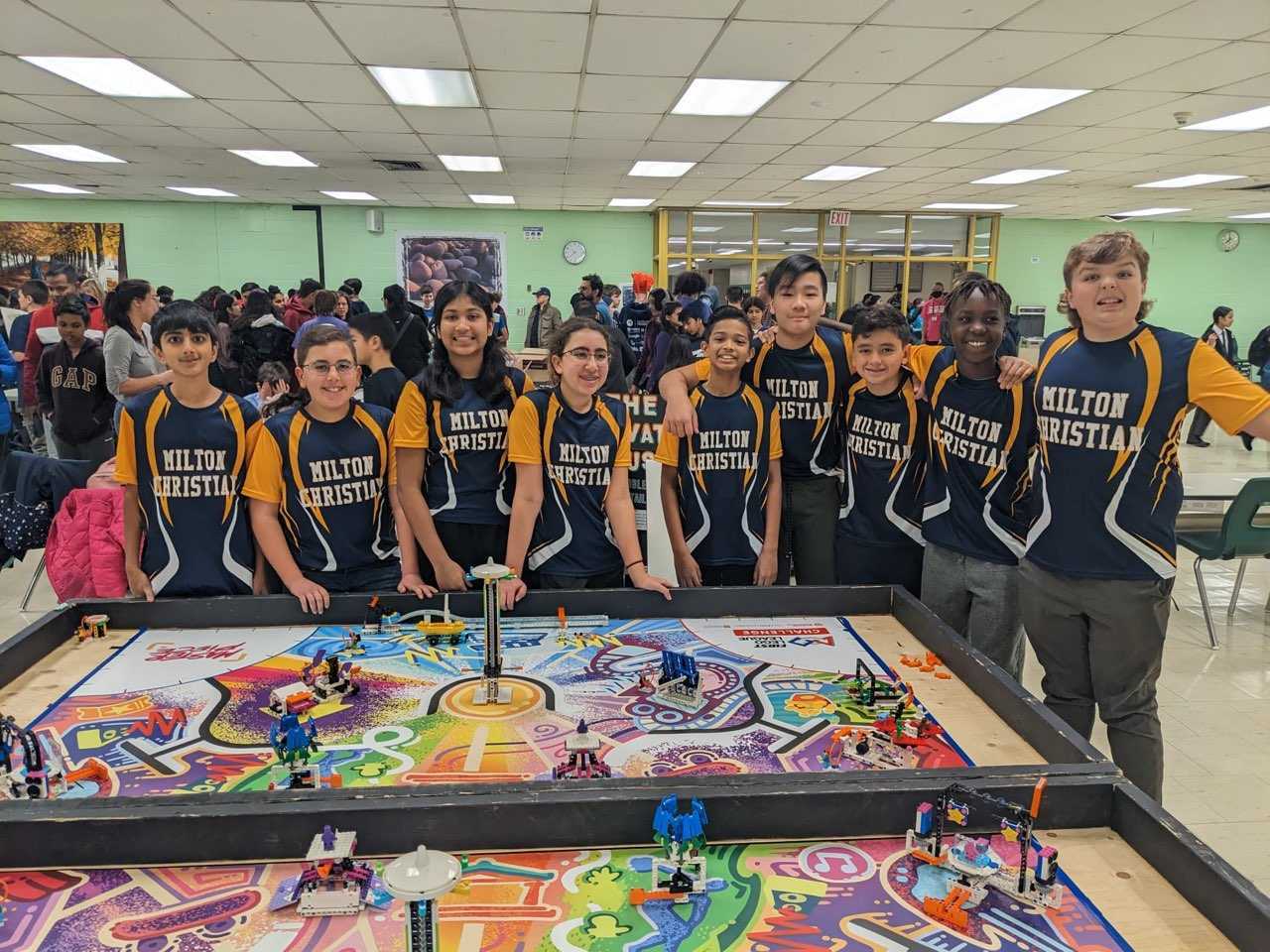
At Zebra Robotics, we are proud of all of our robotics teams, but we are especially delighted when a team first reaps the rewards of their collaboration and determination. Milton Christian School (MCS)’s Republic of MCS is just such a team.
Republic of MCS is advancing to provincial competition in First Lego League (FLL) after their first-ever win at regional competition on December 9, 2023. Provincials will be held at Durham College in Oshawa, ON on January 20, 2024.
Republic of MCS at Regionals
“I knew the students and coaches were working hard these past few months,” said MCS Principal Howie Martin. “It was nice to see their hard work pay off.”
Throughout their preparation, the team worked most on collective problem-solving skills. Teamwork is an essential element of doing well at FLL competitions, and Republic of MCS honed those skills over months of work.
“The chief strength of our FLL team lies in our collaborative and innovative approach to robotics challenges,” said Coach Tahmoor. “Since the MCS team has members from grades 6 to grade 8, each member brings a unique perspective and set of skills to the table.”
Initially, each grade had its own approach to solving the problem, but it was only after the team worked together and refined a solution that they could beat the competition and win the Robot Design Award for a robot that is “mechanically sound, durable, efficient and highly capable.”
“I definitely think that this win will have an incredible impact on STEM education at our school,” said Catherine Magat, MCS teacher and coach. “I also hope that we would see STEM education be a positive influence on the students, particularly in encouraging them to explore STEM fields.” Principal Martin agrees that he hopes more students will participate in robotics next year and beyond.
The team is proud of the win and eager to get to work for provincials. The wider MCS community is rallying behind the team as well. According to Magat, “The school has been so supportive of the team and are proud of what they have accomplished.”
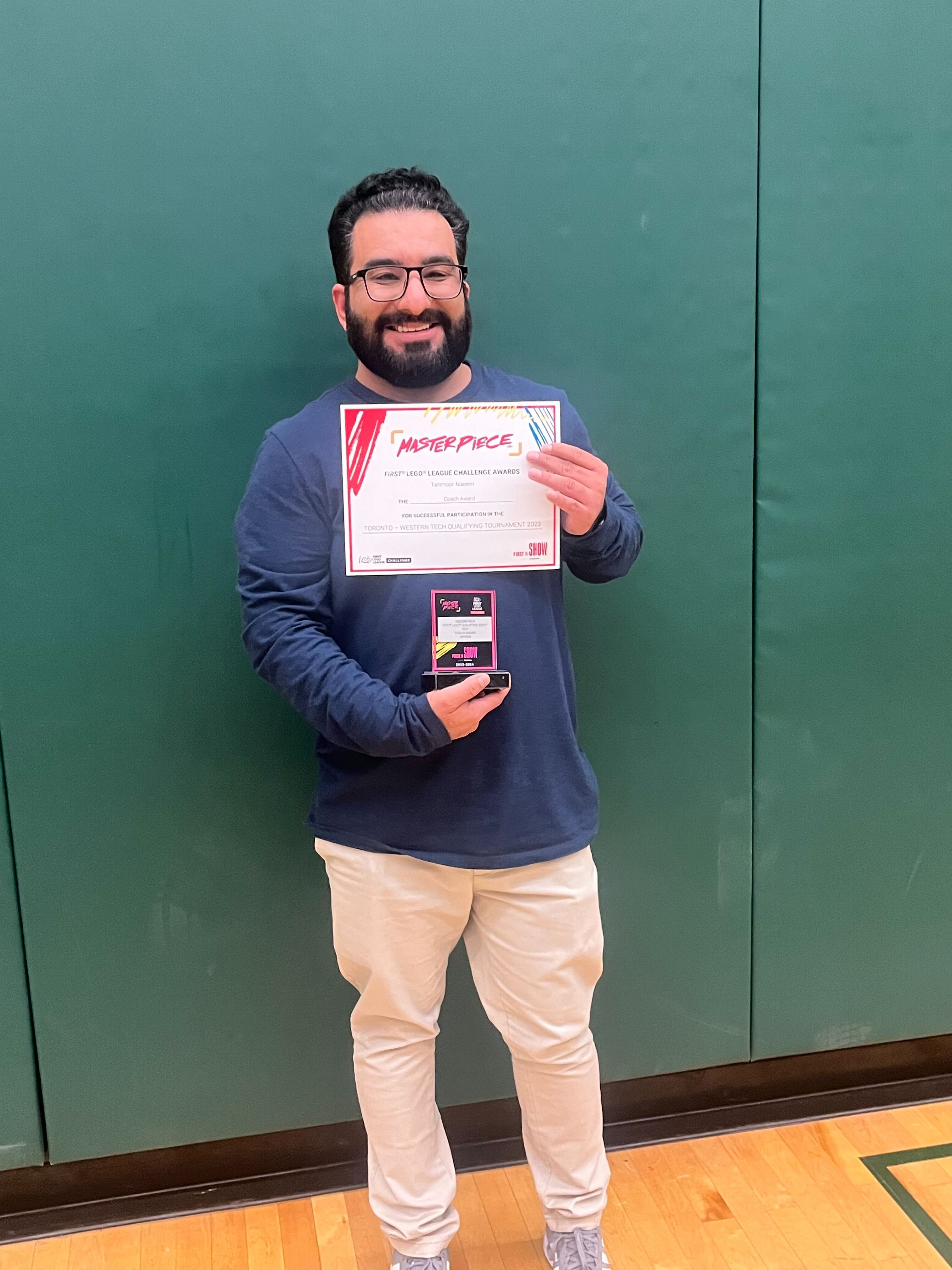
Coach Tahmoor wins the Coach/Mentor Award
Republic of MCS is now practicing the various challenges to perfect their robot and increase their score to hopefully do well enough at provincials to qualify for nationals.
In addition to advancing to provincials and winning the Robot Design Award, the team celebrates Coach Tahmoor, from Zebra Robotics, who won a Coach Award for his mentorship and leadership for the MCS team.
Zebra has been partnering with Milton Christian School (MCS) for three years, offering robotics curriculum in the school and coaching a robotics team. Zebra Robotics offers courses in its many locations throughout the GTA, in addition to partnering with specific schools. Zebra also sponsors the STRIPE Competition to help students test and develop their STEM and collaboration skills.
Canada is consistently ranked in the top 5 countries for education, and it’s for good reason. We have targeted educational programs for a wide range of high school students in addition to a comprehensive governmental curriculum. Secondary school choices are particularly complex, especially for students interested in STEM fields where programs range from hands-on training to broader university-preparation programs. Many grade 8 students can feel overwhelmed by the decision, but it is important to work together to make a thoughtful choice because not all programs are offered in all schools, and there will be social and logistical challenges in addition to the academic ones. Remember that this is an exciting opportunity to find your child’s sweet spot for success.
Special secondary school programs range from comprehensive ones like Advanced Placement (AP) and International Baccalaureates (IB) to STEM-based technical ones. Students enter special high school programs starting in grade 9, so applications must be completed during grade 8. Check your local school districts for specific deadlines, but most informational sessions happen in the early fall, and applications are due in late fall or early winter. The Ontario Association of School Districts provides links to all Ontario school boards on their website: https://www.oasdi.ca/district-list/. All programs discussed here meet the regular, Ontario Ministry of Education curriculum.
The programs
Advanced Placement (AP) programs were developed in the United States in the mid-20th century, responding to a perceived lack of rigor at public schools after colleges and universities began accepting a wider range of students. In AP programs, students learn first-year university material, and if they earn a high enough score on a final exam, they can receive credit from universities.
Students in AP programs learn with other high-achieving students who experience the Ontario curriculum at a faster pace and in more depth before getting to university-level curriculum. Alumni of these programs report that they were well prepared for university courses. AP programs focus on core disciplines like math, English, French, science, etc., but some offer optional preparation for exams like Computer Science Principles. Students must take a minimum number of AP courses per year to remain in most programs.
When students apply for university, they can designate if a course was an AP course or not, though it’s unclear how this designation affects their chances for admission. It’s optional to take the final AP exams, and each costs $130 to take. The exams are graded with levels 1-5, with 5 being the most proficient. Final exam scores do not affect classroom marks. Students can choose to send their final AP exam scores to universities and colleges to which they are applying, just as they would with any entrance exams required in other countries.
For many competitive universities, AP exam scores are not a guarantee of credit and may only earn general credit instead of replacing course requirements. Since Ontario was one of the last provinces to offer AP programs, there are fewer universities in the province that take AP transfer credits. For example, scores on the AP Calculus exam are not awarded credit at the University of Toronto, while the University of Waterloo only accepts .5 credit if the student is not a math major.
International baccalaureate (IB) programs were conceived in Geneva in 1968 but launched in the United States in 1971. They are more comprehensive than AP programs, requiring competence in a wider range of subjects, more in line with liberal arts colleges. There is a deeper emphasis on writing, collaboration, and critical thinking. The writing focus of IB programs is especially good at preparing students for writing college entrance essays. Students complete a research paper and a community service project by the end of the program. The International Baccalaureate Organization monitors all schools who offer the program and reviews them every 5 years. Random student assignments are chosen for regrading at the international office every semester to make sure that teachers are grading in accordance with IB standards. Students do preparatory work in grades 9 and 10 and enter the Diploma Programme in grades 11 and 12. In a long-term study, secondary students who studied in an IB program reported that the program helped them prepare for college coursework, especially in terms of writing, critical thinking, study skills, and time management.
The IB does not specialize in STEM fields. Rather, the curriculum is focused on classic, liberal arts curriculum like literature, language, social sciences, sciences, math, and arts. The math curriculum, however, is rigorous. Computer science is an option for students to study within the science category of the curriculum, but the exams are written rather than demonstrating hands-on programming skills. There are two externally graded examinations in grade 11 and four in grade 12. International baccalaureate diplomas are recognized and esteemed around the world.
If a more applied program is what your child enjoys, there are lots of options. The Science and Technology (SciTech) program is a more hands-on, career-oriented program that features robotics and helps students hone their entrepreneurial skills. Students can participate in STEM competitions and even take certain AP exams if they desire. Graduates go on to universities like McMaster, but the program can also lead to the workplace. Guest speakers and special workshops, in addition to work with laser cutters and 3D printers, showcase the practical focus of the SciTech program.
The objective of the International Business and Technology (IBT) program is to prepare students for 21st Century “jobs that have not yet been created.” Students take six credits of IBT courses in grade 9 and 7 in grade 10, in addition to the standard Ontario curriculum. In grade 11 and 12, they focus on four courses in either business or technology, based on their earlier exploration. Technology courses include engineering, computer science, tech design, and robotics. Students can participate with VEX and First Robotics in addition to using 3D printers and a design lab, as available.
For an even more career-based option, there are the Specialist High Skills Major (SHSM) programs. These programs begin in grades 11 and 12, focusing on a very specific career option. Students take courses in their program of interest, much like they would in their major at college or university. The programs include sector-recognized certificates and training like hazardous materials use or CPR as well as cooperative education credit received for experience in a workplace related to the field of study. The program is designed for students going to university and going into the workplace after school. For example, students studying in the Information and Communications Technology SHSM may go on to be software engineers through university training, web designers and developers through college training, or computer network technicians after an apprenticeship. Not all SHSMs connect to the interests of students in STEM, so it’s important to do your research in the specific program. The most widely available and relevant program is the information and communications technology SHSM.
Enhanced learning programs are individualized instruction for gifted children, much like special education programs offer individualized instruction for children with special learning needs. Families must apply for these accommodations after having their child tested with the Canadian Cognitive Aptitude Test (CCAT) and using the Gifted Rating Scale (GFS) as required by the school’s In School Review Committee. At Tier 1, the student receives differentiated instruction and additional assessment in standard classrooms. At Tier 2, the student is eligible for the In-School Enhanced Learning Program. This offers support including independent learning and help with soft skills for planning, organizing, and thinking critically. At Tier 3, the student is identified as exceptionally gifted and qualifies for enhanced learning classes at the secondary school within their regional boundary. The tiers are meant to scale up or down the level of acceleration needed to keep the student challenged and engaged. Some schools have unique programs, depending on the needs and skills of the region. For example, Halton School District offers a special I-STEM program, which adds innovation on top of STEM focuses on science, technology, engineering, and mathematics. In this program, classroom learning is paired with mentorship and experience in workplaces and the community. In grade 9, students focus on design, shift to entrepreneurship in grade 10, and finally study innovation in grades 11 and 12. They end with a public presentation of work that solves a social, environmental, or economic issue in the world. Students receive an I-STEM certificate when they finish the program, along with valuable experiences that will recommend them for universities and colleges.
Challenges with applying
Special secondary programs that start in grade 9 have an application process. Again, check with your local school district (https://www.oasdi.ca/district-list/) Students must meet or exceed provincial standards for marks and learning skills in grade 7 and 8. Some write short essays or complete an application. In competitive districts like the Peel Region in GTA, the district then compiles a list of students who meet the program requirements based on the application and grades and then enters your child into a lottery for placement. Each successful application is randomly assigned a number by a computer, and enrollment offers are based on a lottery of those numbers. Remaining applicants who meet the requirements but did not get an offer are placed on a waitlist. When the deadline for accepting the first wave of offers is completed, new offers are given until the program is filled. Applying for multiple programs is fine, but as soon as a student accepts an offer, other applications to other programs are suspended. Thus, your child may be a successful applicant for multiple programs, may be on the waitlist for one, receive an offer on the other, and need to make some hard decisions.
African, Black, First Nations, Inuit, and Métis students do not participate in the lottery. If they meet program requirements, they are automatically accepted. Smaller private school boards often offer choices for ambitious secondary students in STEM without lotteries to determine placement. The applications can be fairly rigorous and often include essays and community/school involvement in addition to grades. There are usually application fees for special secondary programs, and there are costs associated with enrollment in the programs. IB and AP programs tend to have the highest fees, which also vary by district.
Finding the right program for your child depends on a lot of factors. As you and your child narrow the choices, it’s important to research the specifics of each program and what’s available in your region. Fall is when schools offer open houses and informational sessions on the different options.
The choice for your STEM child depends on overall academic motivation and goals. The more hands-on programs lend themselves to workplace and college goals while the AP and IB programs lend themselves to university goals. However, that is not a predetermination or a direct path. Students in more applied programs can certainly leverage those experiences to university applications. It is most important to choose a program that keeps your child engaged and invested in their education. Good marks and the ability to communicate knowledge and skills are the most important factors for success in post-secondary education, no matter which program they study.
At Zebra Robotics, our high school students come from different secondary programs, but they all have an interest in coding, robotics, or technology. No matter which program they study, supplemental, enhanced education like after-school and summer programs can help prepare students for university studies. In addition, competition in robotics and coding not only provides them with technical know-how but also prepares them to face the real world as they prepare for university and the workplace.
For more information on the GTA area, here are some resources to help you support your STEM secondary student: