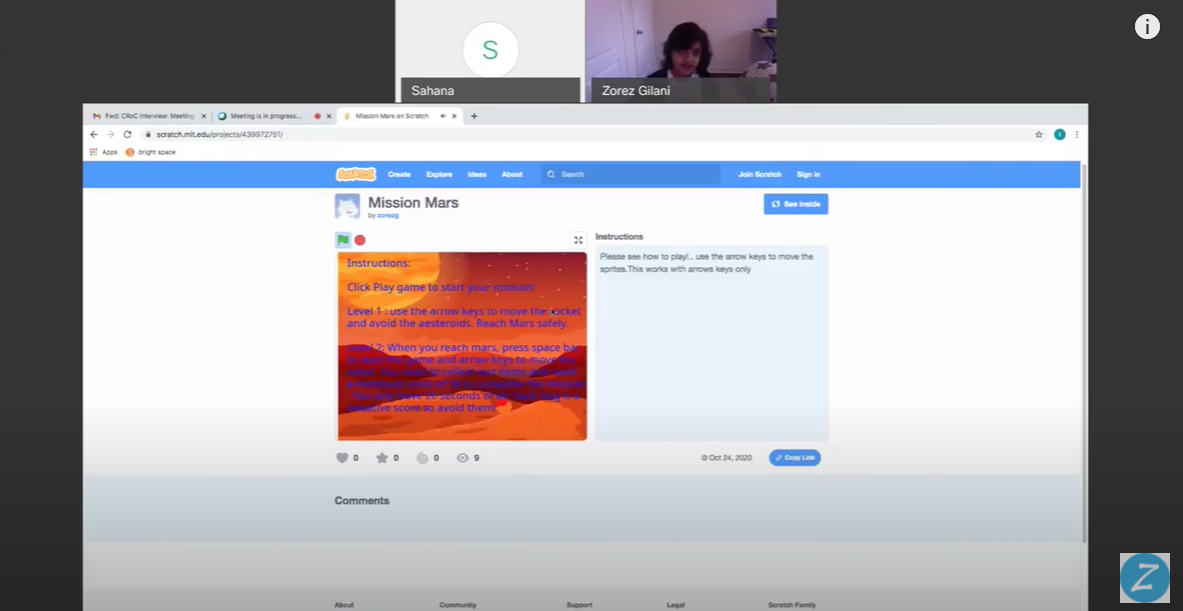
Zorez has been with Zebra for little more than a year, and he is very passionate about Coding. He has a developing interest in Robotics and is keen to learn to build. Here, in this video he presents about his project for CRoC 2020. He particpated in Junior category and won a Zebra Stripe.
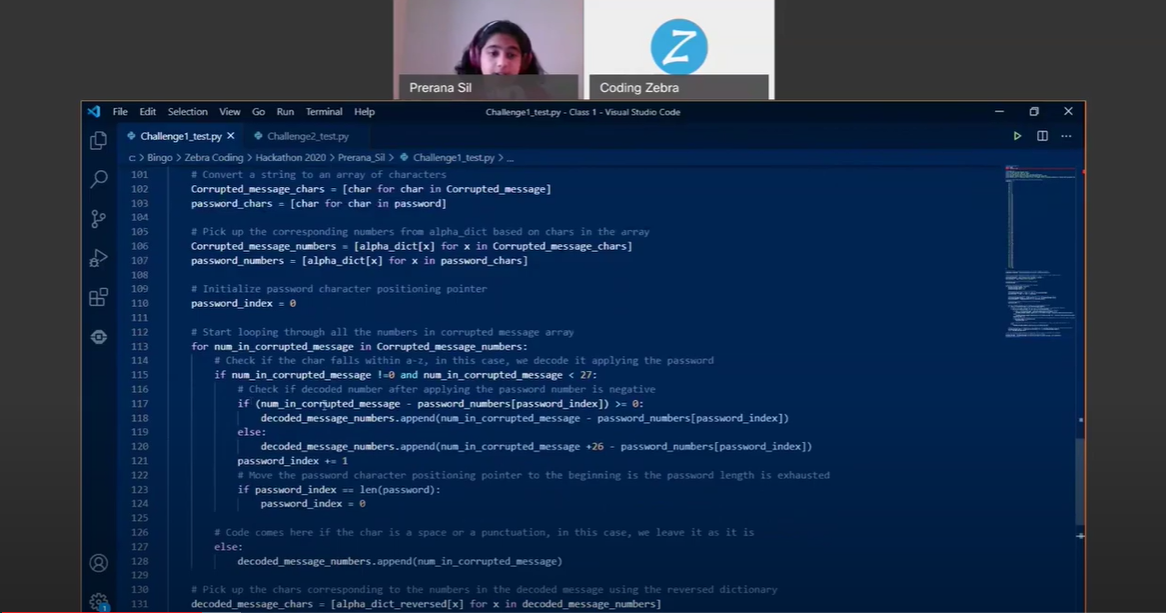
Meet Prerana, one of the Zebra Stripe winner in Python CRoC 2020. Zebra’s Virtual Coding Hackathon. You can watch her present her project, and her passion for Coding here.
In this article, as part of highlighting our student achievers, we asked our student Archish to submit a write up on some of the commonly asked questions. Here are his comments.
How did you develop interest in Coding? Ever since I was young, I have always been fascinated by computers. To this day it mystifies me that a simple line of 8 transistors can give us so much control and visualization over information, entertainment and so much more. With this in mind, I first started learning JavaScript in elementary school using online tutorials. Around middle school, I had started getting into creating small games using JS and Unity. It was in grade 8 however that my biggest breakthrough in coding happened, I discovered Python. Python led me into understanding algorithms, working with data, interacting with API’s and so much more. This would never have happened without Zebra Robotics and I am so glad I have their continued support to keep learning and growing.
What is your favorite programming language and why? Python has to be my favourite program language. Besides it being the language that has gotten me the most into programming and what I have spent the most time working with, it amazes me how many applications it has. From being able to run servers with terabytes and petabytes of data, running algorithms capable of computing and predicting important events and being able to run AI algorithms that can make scarily accurate predictions of our future, there is almost nothing Python cannot do. It can easily be learnt to a basic level by anyone and it also has an incredible amount of potential, and this versatility is what makes it my favourite programming language.
How did Zebra Robotics help you with learning to code? Zebra Robotics has helped me so much in my programming journey. Coding can definitely be a complicated thing to get into, and especially without the proper guidance, it can become really overwhelming. I can’t even get started on how many times I had tried learning how to code in Python and Java before I started classes at Zebra and quit due to the difficulty of the subjects taught. The coaches at Zebra Robotics are so great at explaining concepts to kids of all ages, and make coding fun and engaging for us all. They are able to connect with the students’ interests and make the classes a fun open discussion session, which provides the perfect environment to learn and grow.
What specialization are you interested in pursuing in University? I plan on going into computer science as my undergraduate degree, and pursuing data science for my masters. Alternatively, I would like to do something in food science, and incorporate data science and programming in research after post secondary.
What do you do for fun?
I play guitar, keyboard and am learning Carnatic music. You can watch my creations on my Youtube channel below.
What Coding languages did you have to use in high-school. In high school, we are exposed to the fundamental principles of coding through scratch in grade 10, then Python and Java in grades 11 and 12. We are also taught how to use the Arduino language in computer engineering classes. All of these languages are taught at Zebra Robotics and I am so glad that I have an advantage in these classes by going to Zebra Robotics.
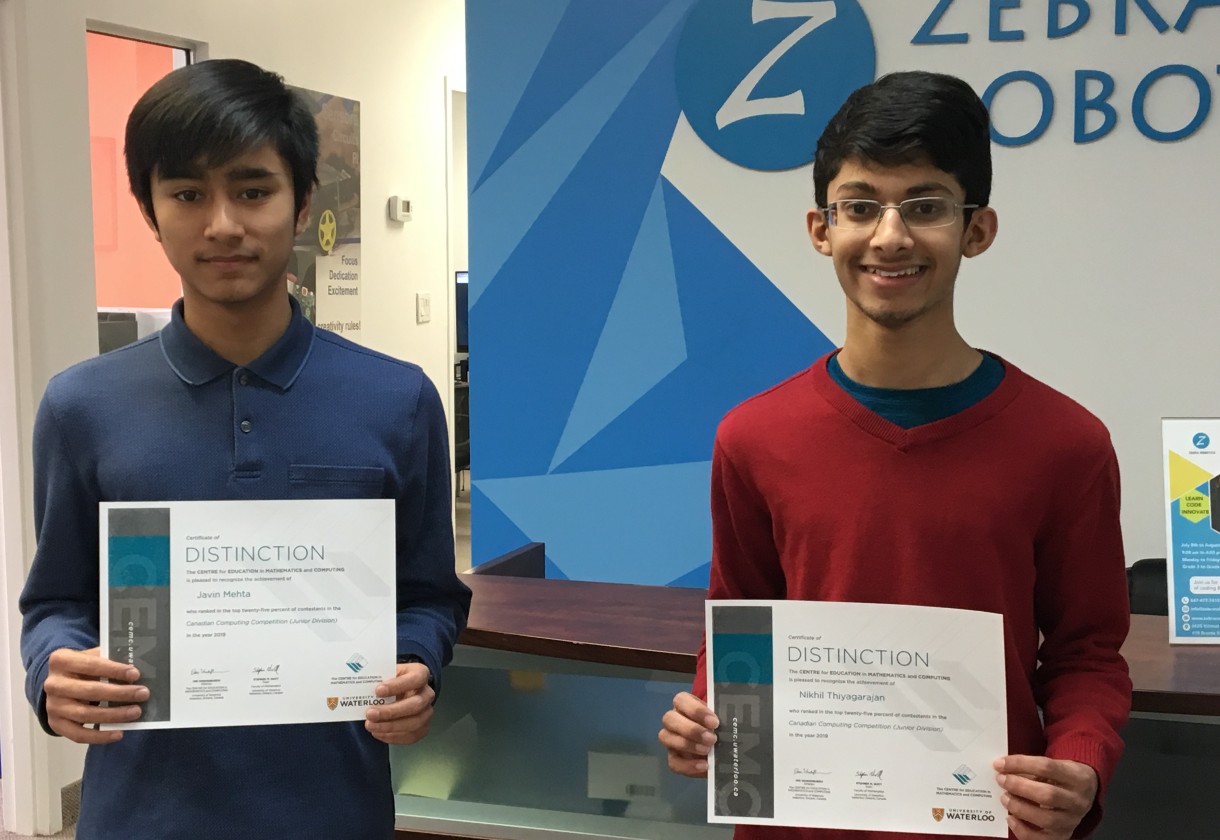
Nikhil and Javin have attempted University of Waterloo’s Canada Computing Challenge (CCC) a year earlier. They both scored in top 70 out of 3700+ students who attempted the challenge world-wide.
Considered one of the difficult computing challenges, University of Waterloo has been conducting these competitions annually. The time allotted for the challenge is three hours and students can attempt as many as five challenges in that period. Students can choose to program in languages such as C,C++, Python, Java among others.
Javin and Nikhil chose different programming languages to solve the challenges. While Javin went with Java as his choice to solve the challenges, Nikhil used Python. We are happy to celebrate our student’s achievements. Our coaches share their warm greetings, and it is always gratifying to see our students succeed. Good to see them persist and thrive.
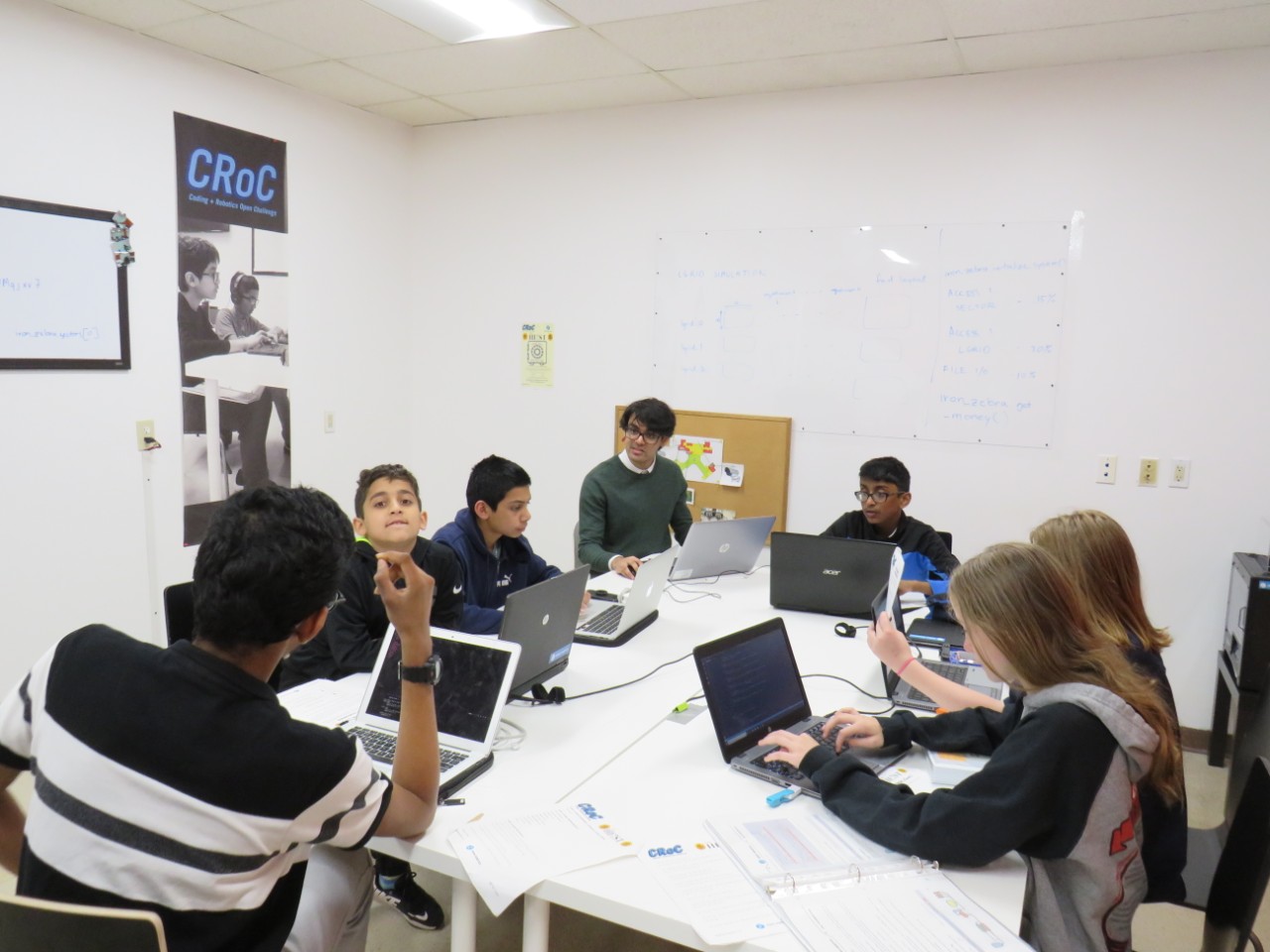
ps: Picture was taken pre-covid. Mask is mandatory for students attending our classes, and so is adhearance to provincial public health guidelines.
Zebra Robotics is happy to reach a milestone of providing over 1500 hours of complimentary coding classes to students across Canada. Through a series of weekly and daily classes, students were introduced to variety of programming languages such as web design, game development, app development .
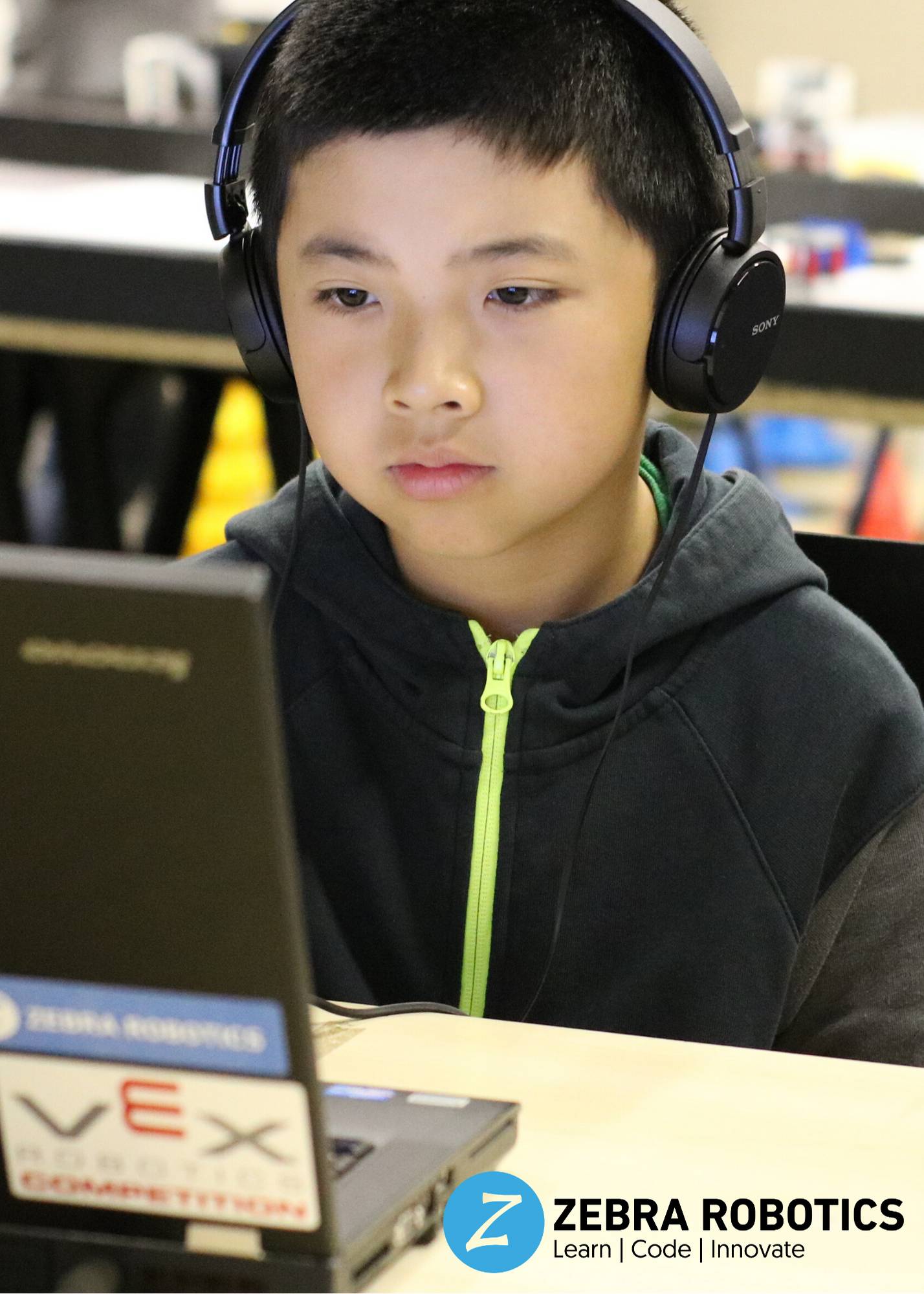
In these instructor led virtual classes, students get to try hands on activities on their computer from home. Weekly webinars introduced several technolgy topics to students. Some of these topics tool the students on a journey to learn what is inside a computer and understand how internet works.
“Community outreach has always been part of our growth” says Sharmila Govindarajan, Co-Founder of Zebra Robotics, “we are glad to be able to contribute positively to the society during these challenging times.”
“Providing same high quality program, in virtual class environment has been our focus. Several positive feedback from parents and students is reassuring for us” said Satish Thiyagarajan, Co-Founder of Zebra Robotics.
This news comes in the wake of many recent initiatives and accomplishments of the company, including:
Migrating 20 robotics and coding courses to be offered virtually.
Opening a new location in Cary, NC to cater to the US customers
“Best class ever” said Anokhi, one of the student who attended a Webinar session. ” It is a way to reach the students, and connect with them, given that we are all struck at home”, said Coach Tahmoor Naeem. “I found it hard to adapt to online teaching, as I am used to being in the classroom and teching kids how to build robots. But after couple of classes, we got into a rhythm, students and I learnt how to communcate without talking over each other, how to share screen when someone needs help”
“We are a nimble company with a proven curriculum, passionate and talented coaching staff” says Jayendra Balasubramanian, Co-Founder at Zebra Robotics. “Our team raised to the challenge and migrated all of our courses to be offered virtually in a matter of days in March, without missing a beat, thereby providing an opportunity for students to continue learning virtually”.
“Thanks to the support from the Government, we are able to sustain our operations during these tough times and set the stage for growth when we emerge out of this” says Sharmila Govindarajan.
About Zebra Robotics Inc.: Started 6 years back in Mississauga, Zebra Robotics has grown to operate in 4 locations, serving over 10,000 students, in Canada, US and India. Zebra Robotics students have won 47 awards in 67 competitions at various levels over the years. Knowledgeable instructors and an extensive course offering made in-house by our experienced and passionate staff with a visionary leadership team, sets up apart with a goal to mentor future generation.
4 amazing benefits of learning programming at a young age
There’s no arguing that computer languages are the truly universal language of this age. Numerous projections also suggest that they would be at the forefront of future careers and innovation. If you want to set up your child for a lifetime of opportunities, it is vital to introduce them to coding at an early age. Here are four awesome benefits your child can derive from learning coding at a young age.
Understanding the science behind technology
It’s one thing to know how to use smartphones and digital gadgets. Understanding the science behind them is another thing entirely. Coding exposes children to how smartphones, computers, toys, and other digital devices work, thus giving them the freedom to create their versions.
Learning vital computational skills
Computer literacy is already a must for anyone in this generation. In the coming generations, however, surface literacy will no longer be sufficient. Kids should not only know how to operate a computer but how to use it in developing solutions to complex problems. Learning no better way to develop this ability than through coding.
Facilitating creativity
Children are naturally curious and more inclined to think outside the box. However, the systems that surround most children suppress this flair as they grow up and blend into the environment. Solving problems through coding can help nurture their creativity right from an early age.
Preparing them for boundless opportunities
In the not so distant future, not knowing how to code may be synonymous with not knowing how to read. Reliable projections are already predicting that people with digital skills will dominate every area of the labor market. If you do not want your child to struggle with the works of the future, you should give them a solid foundation in coding from an early age.
If you are ready to take a giant step towards preparing your children for future success, you should consider any of our coding courses at Zebra Robotics. Our courses are aimed at kids from Grade 2 to Grade 12. Learning from fundamental concepts of coding using block-based interface to writing complex applications using Python, Java and other professional languages. The classes are tailored to give them the right foundation in coding, and our trainers have an impressive track record of working with kids and teens. Get in touch with us today, and we’ll be glad to link you up with a workshop or camp near you.
As you might have heard, in the future there will be two kinds of people. One who knows to code and the rest who wish they know. There is a rush to learn and introduce kids to code at an early age. Major coporations like Microsoft, Google, and Facebook to name a few have invested several millions of dollars to get kids excited about coding.
Croc COding Hackathon
But Why?
As per the authors of The Second Machine Age, Erik Brynjolfsson and Andrew McAfee, Human development index has accelerated in the last few decades, and is on a vertical trajectory. It is mainly fueled by revolution in the Information Technology field. Coding has become mainstream and the need for everyone to know how to code will be considered an essential skill in the future.
Image courtesy: The Second Machine Age
Per a recent survey in North America, close a million jobs paying over $100,000/year will go unfilled with no qualifying candidates to choose from. That is a major problem for the coporations, as we are automating everything now, be it on the factory floor or legal work or shopping or even health care diagnosis. Coding, which provides Artificial Intelligence, powers everything. We need more people who can code.
But where do you start. I’d say ,start early and continue to learn through your life. Technology is changing at a rapid pace. What was revolutionary few years back is common feature few yers later. You want to keep yourself upto date.
Which course is right for my kid?
With so many places that teaches Coding, it can be a daunting task to choose the right place and correct coding language to start with. It is important to not get influenced by fancy jargons. Instead focus on choosing a programming language that is age appropriate. For example, when some one tells me that their Grade 4 kid knows Python, or Java becaue they learned from ‘that’ place, I am skeptical. Many places tell parents that their kid is learning to program in high level languages, when in fact they are using block-based coding, which creates Python or Java code behind it.
It is important for kids to learn the right way, and it helps if it is age appropriate. I know everyone’s kid is a little genius, but un reasonable expectation may dissuade that kid from persuing coding as they grow.
At Zebra Robotics, we always want to take our students to the level where they learn real programming languages as early as in middle school. Prior to that they focus on learning coding concepts in a fun way.
High school and middle school students learn real programming languages such as Python, Java, JavaScript,C++ and other languages that provide solid foundation when students are ready for universities. Just as learning Math or music is not an one week activity, learning to Code isn’t either. Mastery of text based programming languages, trains your way of thinking and takes time. Thinking logically and troubleshooting eventually becomes second nature.
We hope you will be interested to learn to code. Call us or walk to one of our locations to try our courses. Who knows your student may fall in love with coding, as many of our students have discovered themselves.
Javin, started with robotics course at Zebra Robotics in middle school and moved on to learn coding in high school, finishing Web Design, Js, and Java.
Congratulations to Javin, on multiple offers from different universities. He has chosen to join University of Waterloo, with a specialization in Computer Science. We chat with him to talk about Coding and get a student perspective. We hope this will motivate other students who want to pursue Computer Science in University and as career when they grow up.
How did you get interested in coding?
My first experience and interest in coding were through coding EV3 robots as I could control the robot how I wanted to. However, my interest grew when I started to learn HTML, Javascript and Java at Zebra Robotics as I could make and play games, create my own website and even solve problems for competitions. It is also really fun to finally solve problems.
Tell us about yourself, your hobby and what you’d like to do when you are not working on your school or university work?
When I have nothing else to do or assignments can be done at a later date, I like to play video games (normally with friends), watch tv shows, scroll youtube or just talk with friends. However, I also tend to help classmates with their work if they need my help (it’s also helpful for reviewing your classwork).
How long were you a student at Zebra Robotics? What did you like most at Zebra during that time?
I was a student at Zebra Robotics for 5 years going from EV3 to FLL to HTML, Javascript, Java and Java FXML. One of the things I liked about Zebra was that I could do things I did not have the opportunity to do in my school. For example, my middle school did not have an FLL club, yet I was able to participate in such an experience because of Zebra. In addition, during my high school years, I was not able to fit any computer science courses in any semester, yet I was able to learn a few coding languages in a fun environment at my own pace at Zebra Robotics.
If you were to suggest a few things to aspiring Computer Science university students, what would you say?
One of the main factors to becoming a Computer Science university student is a high average; however, participating in competitions, specifically math and computer science related ones will greatly help with your acceptance. If you are planning to go to Waterloo, the Waterloo contests such as Euclid and CCC are very important, but it will never hurt to participate in others. In these competitions, you do not have to be first but the more you participate in, you will obtain higher scores through experience and have some sort of edge during the application process. In addition to these, attending and competing in hack-a-thons will provide you with a slightly different kind of coding experience and even provide you with ideas for side projects that you might want to further work on, which again helps with your application. Overall, it is not all about grades in the application, as some part of it will be proving how well rounded you are or how you enjoy coding, which can be done through different experiences, projects or competitions. Just keep in mind that you do not need to do all of the things above to get an admission, as I never attended a hack-a-thon as a participant, but at the same time doing all of them may not guarantee an admission.
Congratulations on your success in getting accepted for Computer Science in University of Toronto and getting into Dean’s List of Scholars.
How did you get interested in Coding?
My parents found out about Zebra Robotics around 5 years ago and enrolled me into robotics. During the time I was in Robotics I was completely attracted to programming; flash forward a few years and I joined as a student in Java. Initially I struggled with programming but as it was a grade 11 course I had, I had to push myself to learn and somewhere along the line I started to enjoy programming. From there onwards I programmed at every opportunity I got. Eventually my passion for programming took me to pursue computer science and as such I’m a second year Computer Science student.
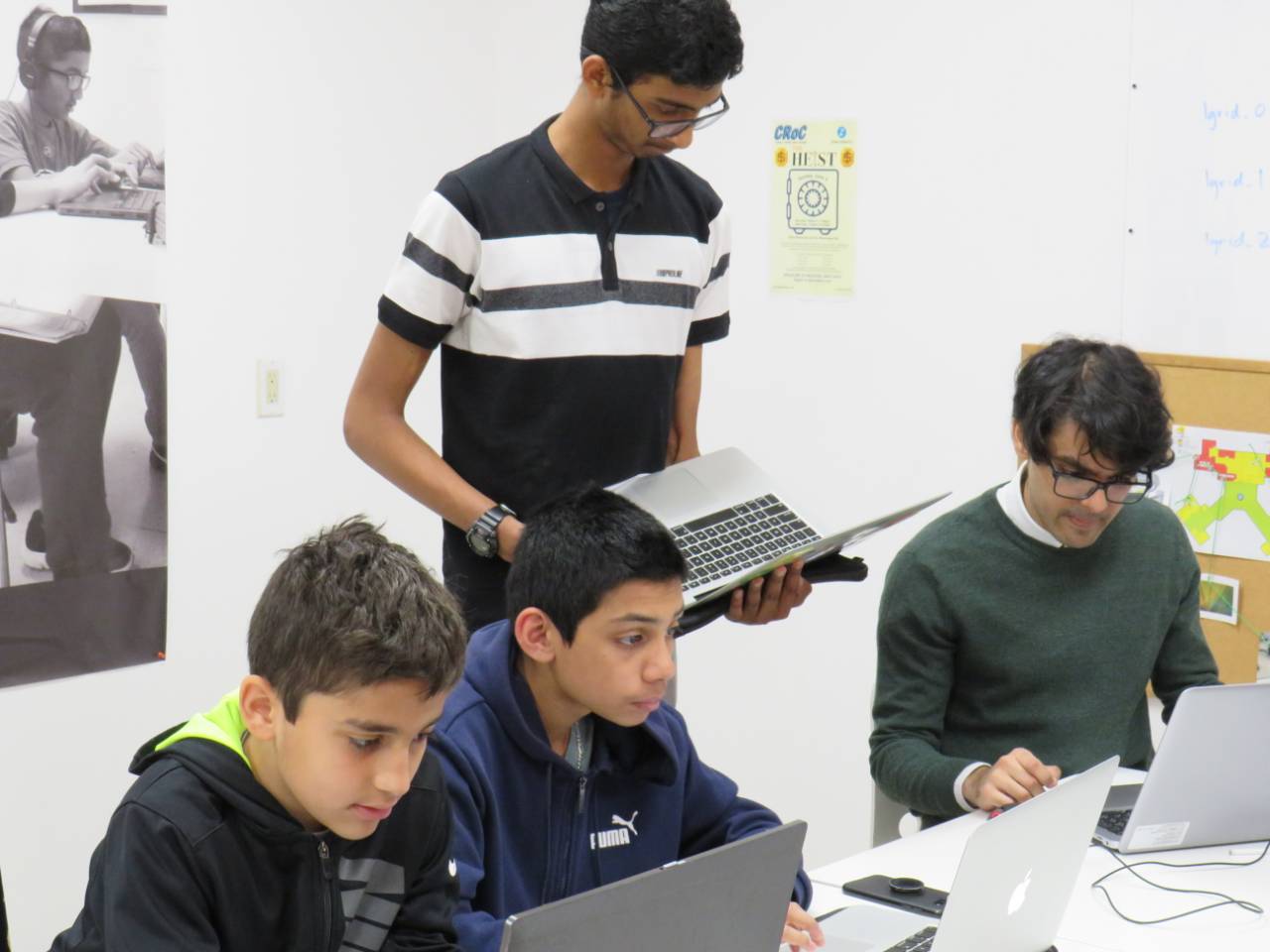
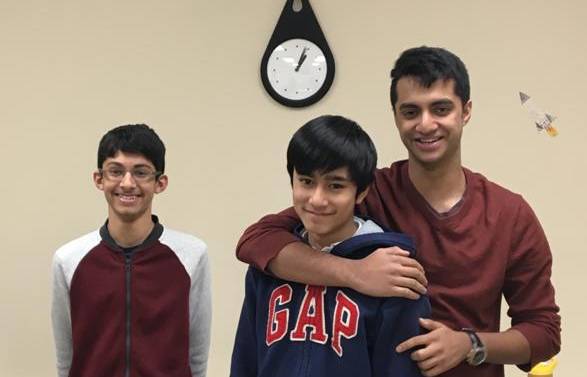
Rajath far right has been a student of robotics and coding. He started volunteering and eventually teaching at Zebra Robotics.
Tell us a bit about yourself, your hobby and what you’d like to do when you are not working on your school or university work.
University and working a job at Zebra takes up most of my time, that being said in the little free time I have I mostly just watch shows. Additionally, I make sure to exercise on my free time, as to counteract sitting down and working for a few hours.
How long were you a student at Zebra Robotics? What did you like most at Zebra during that time?
I was a student for around 3 years, in between which I started working a part-time job at Zebra. I have been a Robotics and Coding instructor at Zebra for a little more than 3 years. While I was a student, I spent my first year in robotics and my next 2 in competition with a bit of coding mixed in.
If you were to suggest few things to aspiring Computer Science university students, what would you say?
Programming as a whole is quite difficult at first because it’s like learning a whole new language. With perseverance, practice, and sincerity anyone can become a programmer. Once you get over the first hump in programming, there will be many more but every single challenge you accomplish helps fortify your skills. For university preparation, learn what languages are essential at the time (java, python, etc..) and that should give you a good head start for first year university.
Congratulations on your success in getting accepted for Computer Science in University of Toronto and University of Waterloo.
Jui has been passionate about learning to code. After she finished learning few programming languages at Zebra Robotics, she volunteered to assist other budding coders.
How did you get interested in Coding?
In Gr. 10, I was convinced I would go into the field of medicine and hopefully specialize in genetic research or become a surgeon. My mom had urged me many times to try my hand at coding but I quite honestly wasn’t interested in trying it at all. I definitely had a vision in my head that programming would be immensely boring and that only a very niche group of people would find it interesting- and I felt certain that I didn’t fall into that category. But I eventually realized that programming would be a useful (and most likely even a necessary) asset to have, even in genetic research, so I found out about Zebra and decided to sign up. After a month or two, surprisingly, I absolutely fell in love with it and decided I wanted to become a software engineer instead. I realized how creative and fun coding could be and how it went far beyond my expectations of what it was and what it could entail.
Tell us a bit about yourself, your hobby and what you’d like to do when you are not working on your school or university work.
Well I’m currently about to start studying Software Engineering at the University of Waterloo, and in highschool, I was a student in the IB program. For the past 7 years, I’ve been doing karate and for the past 2 years, I’ve also started doing jiu-jitsu, which is a form of grappling. MMA (mixed martial arts) is one of my favourite hobbies and it tends to take up most of my spare time. However, I also like to watch documentaries and the UFC, as well as go on bike rides and spend time with my friends and family.
How long were you a student at Zebra Robotics? What did you like most at Zebra during that time?
I was a student at Zebra robotics for almost two years, starting to learn to code there halfway through Gr. 10. During my time there, I can say without a doubt, that it was the people there that made Zebra so special. In my classes, as well as in the younger children’s classes I volunteered in, you could see how happy people were to be at Zebra. The coaches were incredible at teaching and really worked with you one-on-one if you needed help, but what set them apart in my opinion, was that they were really fun too. They would make jokes and also have conversations with the whole class, which was great for me because I tended to be pretty quiet and shy. I found sooner or later that every student ended up loving Zebra, because unlike other places where you take lessons to learn some skill, Zebra made learning fun and interesting. And who doesn’t love that?
If you were to suggest a few things to aspiring Computer Science university students, what would you say?
I would advise aspiring CS students to do things that they truly have an interest in. Too often, because CS programs are so competitive, people sign up for common extracurriculars such as DECA or Model UN in their last year of highschool, just to have something to put on their application. I would say that one of the best and easiest ways to have your application to stand out in really competitive programs is to take part in extracurriculars or projects that are long-term and that you really love. This is not only satisfying in itself, but it also teaches you a host of different skills and helps you stand out from everyone else who have the same extracurriculars and grades. People often only list activities on their application that are relevant to the field they want to go to (such as only focusing on their CS projects if they’re applying to CS)- to show that they have a ‘passion’ for the field they’re going into. Universities can see through this because it’s generally pretty difficult to develop a passion for something if you’ve only been doing for a few years; so engage in some long-term activities that you find interesting and that more importantly, you can learn technical and soft-skills from. Also, I’d highly recommend you spend a lot of time and effort on your application and refine it to the best of your ability, because it can really make a big difference in your chances of admission.